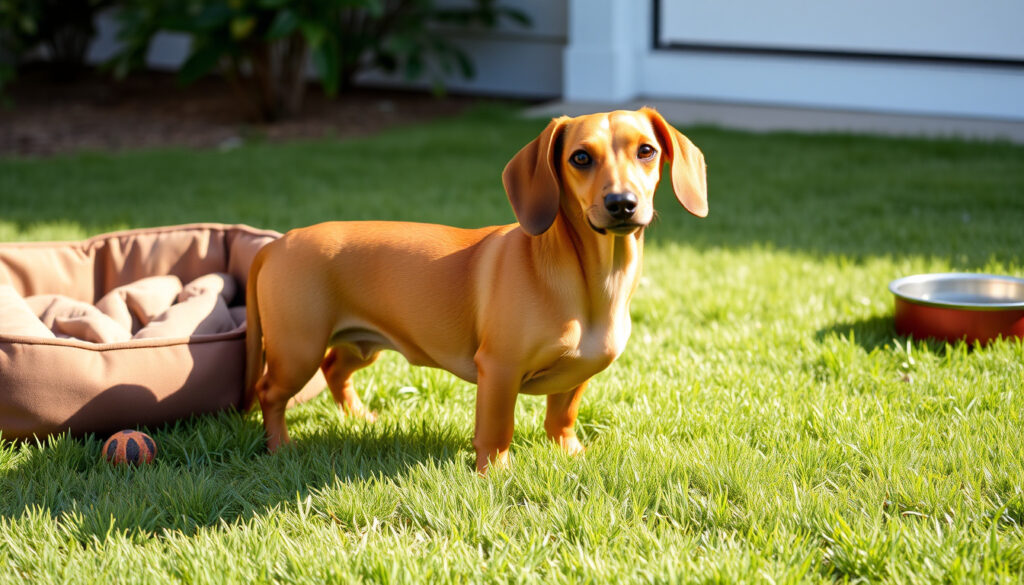
Mini Dachshund: Are They a Good Pet? Pros, Cons, and Care Guide
Miniature Dachshunds pack a big personality into a small frame, but their vocal nature often surprises new owners. This guide provides the facts on temperament, health, exercise, and daily life with a Mini Dachshund.
Average weight: Under 11 lbs (5 kg) · Height: 5-7 inches (13-18 cm) · Lifespan: 12-16 years · Barking tendency: High · Coat types: Smooth, Long-haired, Wire-haired · Temperament: Loyal, affectionate, stubborn
Quick snapshot
- Mini Dachshunds weigh under 11 lbs (ASPCA Pet Insurance)
- Prone to back problems (IVDD) (PetSmart)
- High barking tendency (Dachshund Health UK)
- Which gender is nicer? No scientific consensus
- Which variety is calmest? Anecdotal evidence only
- Exact exercise needs vary by individual
- Lifespan 12-16 years (Pedigree UK)
- IVDD risk begins in middle age (Pedigree UK)
- Regular vet checks recommended from puppyhood (Pedigree UK)
- Choose a reputable breeder or rescue
- Prepare for frequent barking and training
- Set up spine-safe exercise and home environment
| Attribute | Value |
|---|---|
| Weight | Under 11 lbs (5 kg) |
| Height | 5-7 inches (13-18 cm) |
| Lifespan | 12-16 years |
| Barking tendency | High |
| Coat types | Smooth, Long-haired, Wire-haired |
| Origin | Germany |
The table shows a breed built for small spaces but with a loud voice and a long commitment.
Are mini Dachshunds a good pet?
Miniature Dachshunds are loyal, affectionate, and adaptable — but that comes with a stubborn streak. The breed standard calls them intelligent, lively, courageous to the point of rashness (The Kennel Club (UK)). They thrive in small spaces, but their vocal nature means they’re not a quiet lapdog.
Which Dachshund is the calmest?
- Standard longhaired Dachshunds are generally the most laid-back (Dachshund Health UK)
- Mini-Smooths in a survey were less likely to bark excessively than the overall population (same source)
- Wire-haired Miniatures are described as terrier-like in energy
- Individual temperament varies more than coat type
The trade-off: calmer varieties often require more grooming. Longhaired coats need regular brushing, while wire-haired coats need hand-stripping.
If you want a quieter Mini Dachshund, a Mini-Smooth may be a better bet — but no variety is guaranteed to be silent.
For owners, the choice of coat type involves a trade-off between barking tendency and grooming effort, with no variety promising silence.
What are the cons of a mini dachshund?
Three challenges dominate: barking, stubbornness, and back health. The same traits that make them charming can test an owner’s patience.
Are dachshunds prone to biting?
- Biting is rare; the breed’s instinct is to bark, not bite — as one trainer put it, “barking, lots of barking, even more barking — rarely any biting.” (The Dog’s Way)
- Aggression can arise from fear or guarding, especially if not socialized early
- Mini-Smooths in a survey showed higher rates of submissive piddling and separation anxiety (Dachshund Health UK)
- They are possessive of their owners and may snap if surprised
What this means: early socialization is non-negotiable. A well-trained Mini Dachshund is a confident companion, not a biter.
Mini Dachshunds are prone to Intervertebral Disc Disease (IVDD). Repeated jumping off furniture can cause spinal injury. Owners must use ramps and avoid high-impact play.
The implication: a Mini Dachshund’s health requires constant vigilance against activities other dogs handle without thought.
Do Dachshunds like to cuddle?
Yes — Dachshunds are famously affectionate and seek physical closeness. They were bred as badger hunters, but their post-work personality is all about lap time.
- They are known as “velcro dogs” that follow owners from room to room
- Sleeping in the same bed is common among owners
- Clinginess can lead to separation anxiety if left alone too long (Dachshund Health UK)
- They enjoy being held, but need to be supported properly to protect the spine
The pattern: a Dachshund’s love is unconditional, but its need for closeness can be demanding. Owners who work from home or have a flexible schedule often find this endearing; those who travel frequently may struggle.
The catch: the same affection that makes them wonderful lap dogs can become a source of anxiety if the owner’s schedule doesn’t allow constant companionship.
Are girl or boy Dachshunds nicer?
Opinions vary, but data is thin. The general consensus among breeders and owners:
- Male Dachshunds are often more affectionate, playful, and eager to please
- Females tend to be more independent and can be moody, especially when in heat
- Neutering and spaying reduce hormone-driven behaviors
- Individual temperament varies more than gender
- No scientific study shows a consistent difference in “niceness”
The implication: choose based on the individual dog’s personality, not gender. Spend time with the puppy or adult before deciding.
Do mini Dachshunds like to go on walks?
Yes — they enjoy walks, but they are not high-energy dogs. Moderate exercise keeps them fit and mentally stimulated.
Should you walk a Dachshund every day?
- Two daily walks of 15-20 minutes are recommended by PetSmart
- Walking on a harness (not a collar) protects the neck and spine
- Allow sniffing and exploring — that’s mental enrichment
- Avoid stairs and jumping off curbs to reduce IVDD risk
Why this matters: a daily walk routine prevents obesity, which is a major risk factor for back problems. The ASPCA Pet Insurance notes that keeping a Dachshund trim is one of the best health protections.
For the owner, a consistent walking routine is the single most effective tool for managing both weight and behavior in a Mini Dachshund.
Miniature vs Standard Dachshund: a comparison
Three size differences, one pattern: Miniatures are easier to lift but more fragile.
| Attribute | Miniature Dachshund | Standard Dachshund |
|---|---|---|
| Weight | Under 11 lbs (5 kg) (Pedigree UK) | 16-32 lbs (7-14 kg) (same source) |
| Height | 5-7 inches (13-18 cm) | 8-9 inches (20-23 cm) |
| Barking | High — but Mini-Smooths may be less barky (Dachshund Health UK) | High, but varies by coat |
| Exercise needs | Moderate — two short walks daily | Moderate — slightly longer walks |
| IVDD risk | Very high — especially in small frames | High — but less prone to injury from jumping? |
| Best for | Apartment dwellers, less active owners | Homes with yards, more active owners |
The pattern: Miniatures are better suited for small spaces, but their fragile backs demand more vigilance. Standards are sturdier but need more space and exercise.
Pros and cons of owning a Mini Dachshund
Upsides
- Loyal and affectionate companion
- Small size suits apartment living
- Low grooming needs (smooth coat)
- Long lifespan (12-16 years)
- Intelligent and trainable with patience
Downsides
- Excessive barking can disturb neighbors
- Stubbornness makes training challenging
- High risk of IVDD back injury
- Separation anxiety common
- Can be possessive or jealous
The pattern: the Mini Dachshund’s strong suit—its loyalty—is also the source of its most challenging behaviors.
What’s confirmed and what’s unclear
Confirmed facts
- Mini Dachshunds weigh under 11 lbs
- They are prone to back problems (IVDD)
- They have a high barking tendency
What remains unclear
- Which gender is nicer? No scientific consensus
- Which variety is calmest? Anecdotal evidence only
- Exact exercise needs vary by individual
What owners say
Barking, lots of barking, even more barking — rarely any biting.
— The Dog’s Way (dog training resource)
Miniature Dachshunds have a loving, dependable nature, often referred to as a ‘Doxie’.
— Bella & Duke (pet nutrition brand)
Final word
Mini Dachshunds are not for everyone. Their loyalty and charm are real, but so is the noise, the stubbornness, and the constant vigilance required to protect their backs. For an owner who can commit to daily walks, patient training, and a spine-safe home, the reward is a devoted companion for a dozen years or more. For the unprepared, the bark and the vet bills can be a shock. The responsible owner chooses this breed knowing the noise and fragility come with the package.
Related reading: American Staffy vs Pit Bull: Temperament & Care Guide
sitmeanssit.com, youdidwhatwithyourweiner.com, thesprucepets.com, reddit.com, k9sportsack.com, puppymansionmiami.com, dachshundclubofamerica.org
Frequently asked questions
Are mini Dachshunds good with children?
They can be, but they are not the best breed for very young children. Their small size makes them fragile, and they may snap if handled roughly. Supervision and early socialization are essential.
Do mini Dachshunds shed a lot?
Smooth coats shed moderately year-round. Long-haired and wire-haired varieties shed less but require more grooming. Regular brushing helps control loose hair.
How much exercise does a mini Dachshund need?
About 30 minutes of moderate exercise per day, split into two walks. Avoid high-impact activities like jumping or running on stairs.
Are mini Dachshunds easy to train?
They are intelligent but stubborn. House training can be challenging, especially for Mini-Smooths. Positive reinforcement and consistency work best.
What health problems are common in mini Dachshunds?
Intervertebral Disc Disease (IVDD) is the most serious. Obesity, dental issues, and patellar luxation are also common. Regular vet checkups are important.
Can mini Dachshunds live in apartments?
Yes, they are well-suited to apartment living due to their small size. However, their barking may be a concern for neighbors. Training and exercise help manage it.
More related posts
 French Translation: Most Accurate Tools & Key Phrases Explained
 Mt Fuji Guide: Climbing Routes, Best Times & How to Get There
 Upload Blog Marketing: Rules to Boost Traffic and Income
 Scott Pilgrim Takes Off: Release Date, Cast & Facts
 Suncorp Building Insurance: Reviews, Claims & Contact 2024
 Dilraba Dilmurat: Biography, Career, Net Worth & Personal Life
 Saturn Devouring His Son: Myth, Rubens & Goya
 Kim Kardashian: Diagnosis, Relationships, Net Worth, and More
