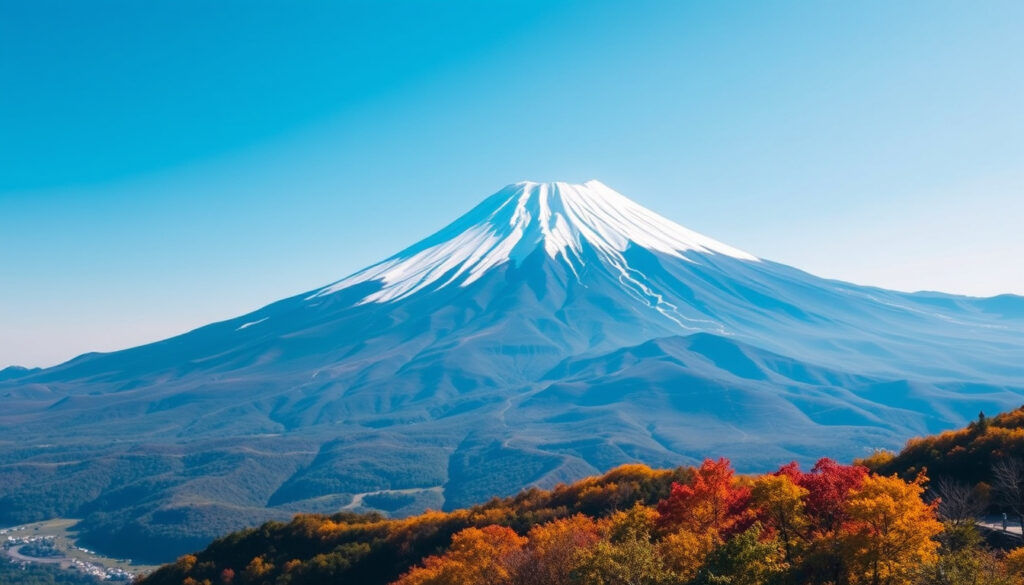
Mt Fuji Guide: Climbing Routes, Best Times & How to Get There
If you’ve ever seen a postcard of Japan’s iconic symmetrical peak, you already know why Mount Fuji draws millions of visitors each year. But the reality of visiting in 2026 involves trail fees, daily caps, and a short summer window that catches many travelers off guard. This guide unpacks the practical decisions—which trail, when to go, how to get there, and what the new entry rules mean for your trip.
Height: 3,776 m (12,388 ft) ·
Location: Straddles Shizuoka and Yamanashi prefectures, Japan ·
Last confirmed eruption: 1707 ·
Climbing season: Early July to early September ·
UNESCO status: World Heritage Site (2013)
Quick snapshot
- Japan’s highest mountain at 3,776 m (Official Mt. Fuji Climbing Website)
- Active stratovolcano (Wikipedia)
- Near-perfect symmetrical cone (Japan-guide.com)
- UNESCO World Heritage Site (UNESCO World Heritage Centre)
- Long history of pilgrimage (Wikipedia)
- Iconic subject in Japanese art (Japan-guide.com)
- Seasonal trails open in summer (Official Mt. Fuji Climbing Website)
- 4 main climbing trails (Rakuten Travel (travel booking platform))
- Accessible by train and bus from Tokyo (Japan-guide.com)
- Yoshida Trail has entry controls (Rakuten Travel (travel booking platform))
- Some photo spots blocked (Official Mt. Fuji Climbing Website)
- Winter trails closed after season (Official Mt. Fuji Climbing Website)
Eight key facts capture the essentials of Mount Fuji, from its volcanic nature to the short window when climbing is allowed.
| Name | Mount Fuji (Fujisan) |
|---|---|
| Height | 3,776 m / 12,388 ft |
| Prefectures | Shizuoka and Yamanashi |
| Volcano type | Active stratovolcano |
| Last confirmed eruption | 1707 (Hōei eruption) |
| National park | Fuji-Hakone-Izu National Park |
| Climbing season | Early July to early September |
| World Heritage | Inscribed 2013 |
What’s so special about Mount Fuji?
At 3,776 meters (12,388 feet), Fujisan is Japan’s tallest peak and an active stratovolcano with a near-perfect cone that has inspired artists and pilgrims for centuries (Official Mt. Fuji Climbing Website; Wikipedia). Volcanic activity that built the mountain began roughly 100,000 years ago, and the last confirmed eruption occurred in 1707 (Wikipedia). Its cultural and religious significance earned it a UNESCO World Heritage listing in 2013 (UNESCO World Heritage Centre). The mountain sits within Fuji-Hakone-Izu National Park and straddles Shizuoka and Yamanashi prefectures (Japan-guide.com).
The implication: Mount Fuji is more than a scenic backdrop—it’s a living volcano with a deeply layered cultural identity that Japan actively protects.
Which city is closest to Mount Fuji?
Two main base cities sit at the mountain’s foot: Fujiyoshida on the Yamanashi side and Fujinomiya on the Shizuoka side (Japan-guide.com). Gotemba and Fuji are additional access points on the Shizuoka side (Japan-guide.com). When comparing Tokyo and Kyoto, Mount Fuji is decidedly closer to Tokyo.
Is Mt. Fuji closer to Tokyo or Kyoto?
Tokyo is about 100 km from the mountain as the crow flies; Kyoto is roughly 300 km away. The Tokaido Shinkansen connects Tokyo to Shin-Fuji Station in about one hour, followed by a bus or taxi to the 5th Station (Japan-guide.com). Travelers from Kyoto usually route through Tokyo or plan an overnight stay in the Fuji area because a same-day round trip is impractical.
How long is the bullet train from Tokyo to Fuji?
The fastest Nozomi shinkansen reaches Shin-Fuji Station in approximately 60 minutes. From Shin-Fuji, local buses run to the 5th Station in about 50–60 minutes (Japan-guide.com). That makes a combined door-to-door journey of roughly two hours from central Tokyo to the trailhead starting point.
Choosing Fujiyoshida over Fujinomiya gives you direct access to the Yoshida Trail, the most beginner-friendly route, but adds 30 minutes of travel from Tokyo compared to the Shizuoka-side stations.
The pattern: proximity to Tokyo makes Fuji a viable day trip, but Kyoto-based visitors face a half-day commitment each way.
How hard is it to climb Mount Fuji?
The climb reaches 3,776 m with serious elevation gain, steep inclines, rapidly changing weather, and long hours on your feet (Explore-Share (specialist climbing outfitter)). Many climbers start from the 5th Station and plan 6 to 10 hours round trip depending on route and fitness (Rakuten Travel (travel booking platform)). The official climbing season is limited to summer (early July to early September), and all trails are closed in winter (Official Mt. Fuji Climbing Website).
Is 1 day enough for Mount Fuji?
One day can work as an ambitious day trip from Tokyo if you start very early and take the Yoshida Trail. Many itineraries, however, use an overnight mountain hut to split the ascent over two days and allow sunrise viewing (Rakuten Travel (travel booking platform)). The Yoshida ascent typically takes 5–7 hours and the descent 3–5 hours.
How long is the walk to Mount Fuji?
The walk itself is not a single distance but a climb from the 5th Station to the summit. On the Yoshida Trail (starting at ~2,300 m), the uphill portion is about 7.5 km with 1,400 m of elevation gain. On the Fujinomiya Trail (starting at ~2,400 m), the route is shorter but steeper and rockier (Explore-Share (specialist climbing outfitter); Rakuten Travel (travel booking platform)).
The catch: even the “easier” trails demand respectable fitness and preparation; altitude sickness is a real risk for anyone rushing up in a single day.
Can tourists visit Mount Fuji?
Yes, tourists can visit the Fuji area and the 5th Station without climbing the mountain. The 5th Station is accessible by car or bus year-round (weather permitting). However, the official Mt. Fuji Climbing Website currently reports that the 2026 climbing season has ended and winter trails are closed (Official Mt. Fuji Climbing Website). There is no general photography ban; some specific photo spots have been blocked or managed because of crowd behavior (Official Mt. Fuji Climbing Website). No nationwide tourist cap appears in the provided sources, but trail-level entry controls and booking requirements are the main restrictions.
Why can’t you take photos of Mount Fuji?
The idea that photography is banned is a myth. Local authorities have placed screens at certain convenience stores and Lawson outlets in Fujiyoshida to discourage dangerous roadside photo stops by tourists (Official Mt. Fuji Climbing Website). The screens obscure the view from those specific spots but do not prohibit photography of the mountain elsewhere.
Is Japan limiting tourists in 2026?
For Mount Fuji, the Yoshida Trail has a daily limit of approximately 4,000 climbers in 2026 (Rakuten Travel (travel booking platform)). On the same trail, climbers without a mountain-hut reservation cannot pass the gate between 2:00 p.m. and 3:00 a.m. (Rakuten Travel (travel booking platform)). Similar overnight rules apply on Shizuoka-side routes (Shizuoka Prefecture Mt. Fuji climbing notice).
What this means: you can visit, but if you plan to climb, you need to reserve early and respect the time gates.
What is the best time of year to visit Mount Fuji?
That depends on your goal. For clear summit views, the cooler, drier winter months (December to February) offer the highest visibility. For climbing, the official season runs early July to early September (Official Mt. Fuji Climbing Website). Spring and autumn can deliver clear days but also more cloud cover.
Which month is Mount Fuji most visible?
December and January typically provide the clearest air and a snow-covered peak—ideal for photographers. Late August and early September are often less crowded climbing windows within the summer season (Japan-guide.com).
Winter visitors who want only to photograph the mountain can access the 5th Station area by road, but the trails themselves are closed and dangerous. The trade-off for a perfect snow-capped shot is the inability to climb.
The pattern: choose your season based on whether you want to climb or photograph—you can’t reliably do both in the same trip.
Four official trails, one comparison worth making.
| Trail | Start elevation | Ascent time | Descent time | Difficulty note | 2026 fee |
|---|---|---|---|---|---|
| Yoshida | ~2,300 m | 5–7 h | 3–5 h | Most beginner-friendly, many huts | ¥4,000 |
| Fujinomiya | ~2,400 m | 4–7 h | 2–4 h | Highest start, steep and rocky | ¥4,000 |
| Subashiri | ~2,000 m | 5–8 h | 3–5 h | Forest section, joins Yoshida higher up | ¥4,000 |
| Gotemba | ~1,440 m | 6–9 h | 3–6 h | Longest, lowest start, most challenging | ¥4,000 |
Elevation and timing data from Rakuten Travel (travel booking platform); fee from Shizuoka Prefecture Mt. Fuji climbing notice and The Japan Guides (specialist travel publication).
Upsides
- Extraordinary summit views and sunrise experience
- Well-maintained trails with mountain huts and rest stations
- Accessible from Tokyo in under 3 hours
- Cultural pilgrimage with UNESCO recognition
Downsides
- Short climbing season – only 8 weeks in summer
- Altitude sickness risk above 3,000 m
- Crowds and daily caps on popular trails
- Expensive when factoring hut, fee, and transport
How to plan a successful Mount Fuji climb: 5 steps
- Choose your trail – Yoshida for beginners, Fujinomiya for a shorter steeper option, Subashiri for a quieter forest route, Gotemba for a longer endurance challenge (Rakuten Travel (travel booking platform)).
- Confirm the season and dates – The Shizuoka-side trails open July 1 (Subashiri) and July 10 (Fujinomiya and Gotemba) in 2026; the Yamanashi-side Yoshida Trail typically opens early July. All close in early September (Shizuoka Prefecture Mt. Fuji climbing notice).
- Reserve a mountain hut – If you plan an overnight climb, book a hut in advance. On the Yoshida Trail, a reservation is required to pass the gate between 2 p.m. and 3 a.m. (Rakuten Travel (travel booking platform)).
- Prepare gear and fitness – Bring layers, headlamp, rain gear, and snacks. Practice hill walking with 1,000+ m of elevation gain beforehand (Explore-Share (specialist climbing outfitter)).
- Understand the fees and limits – The 2026 hiking fee is ¥4,000 per person across all routes. The Yoshida Trail has a daily cap of about 4,000 climbers (Rakuten Travel (travel booking platform)).
First-timers: choose Yoshida, reserve a hut, and plan a two-day itinerary. Experienced hikers might tackle Gotemba for a quieter, more demanding day.
What this means: a successful climb depends less on last-minute heroics and more on booking early and matching the route to your fitness.
Mount Fuji timeline
- ~100,000 years ago – Volcanic activity that built Mount Fuji began. (Wikipedia)
- 1707 – Last confirmed eruption (Hōei eruption). (Wikipedia)
- 2013 – UNESCO listed Fujisan as a World Heritage Site. (UNESCO World Heritage Centre)
- Early July to early September – Official climbing season. (Official Mt. Fuji Climbing Website)
- 2026 season – Official climbing website reports season ended; winter trails closed. (Official Mt. Fuji Climbing Website)
Sources: Wikipedia, UNESCO World Heritage Centre, Official Mt. Fuji Climbing Website.
What’s confirmed and what’s unclear
Confirmed facts
- Mount Fuji is Japan’s highest mountain at 3,776 m. (Official Mt. Fuji Climbing Website)
- Mount Fuji is an active stratovolcano. (Wikipedia)
- The official Mt. Fuji Climbing Website reports that the 2026 climbing season has ended and the mountain is closed. (Official Mt. Fuji Climbing Website)
- Fujiyoshida and Fujinomiya sit at the mountain’s base and are common access points. (Japan-guide.com)
- Mount Fuji is closer to Tokyo than to Kyoto. (Japan-guide.com)
What’s unclear
- Which single municipality is administratively closest to the summit depends on boundary definitions and prefecture claims.
- Whether specific photo-restriction screens remain in place in 2026 requires checking local reports. (Official Mt. Fuji Climbing Website)
- Exact 2026 reservation caps and trail rules may change; travelers should verify on the official Mt. Fuji Climbing Website before departing. (Official Mt. Fuji Climbing Website; Rakuten Travel (travel booking platform))
- Whether the ¥4,000 fee announced for Shizuoka-side routes also applies uniformly to the Yamanashi-side Yoshida Trail. (Shizuoka Prefecture Mt. Fuji climbing notice; The Japan Guides (specialist travel publication))
- Whether the daily climber cap applies to all trails or only the Yoshida Trail. (Rakuten Travel (travel booking platform))
Uncertain points based on Official Mt. Fuji Climbing Website and Rakuten Travel (travel booking platform).
Perspectives from the mountain
Mount Fuji is Japan’s highest mountain, formed by volcanic activity over roughly 100,000 years. Its symmetrical cone and cultural significance make it a must-see for any visitor.
The 2026 official climbing season has ended and winter trails are closed. All facilities are shut, and climbing outside the season is extremely dangerous.
Mount Fuji is an active stratovolcano with a last confirmed eruption in 1707. It straddles Shizuoka and Yamanashi prefectures within Fuji-Hakone-Izu National Park.
Fujisan’s near-perfect symmetrical cone is best appreciated from the surrounding lakes and hot spring towns. The mountain is a sacred site with a long pilgrimage tradition.
For the traveler eyeing a 2026 trip, the choice is clear: either embrace the short summer climbing window with careful planning and reservations, or visit outside the season for a purely photographic experience with no trail access. Japan’s balancing act between preserving a sacred landmark and accommodating global tourism means you cannot have both on the same trip.
Frequently asked questions
Can you visit Mount Fuji without climbing it?
Yes. You can drive or take a bus to the 5th Station on either side of the mountain to enjoy the views and surrounding shops. No hiking experience is needed. (Japan-guide.com)
Do you need to reserve a mountain hut on Mount Fuji?
If you plan an overnight climb, yes. On the Yoshida Trail a hut reservation is mandatory to pass the gate during afternoon and early morning hours. (Rakuten Travel (travel booking platform))
Can beginners climb Mount Fuji?
Yes, with preparation. The Yoshida Trail is considered the most beginner-friendly because it starts high and has many huts. Reasonable fitness and proper gear are essential. (Explore-Share (specialist climbing outfitter))
How do you get from Tokyo to Mount Fuji’s 5th Station?
Take the Tokaido Shinkansen to Shin-Fuji Station (about 1 hour), then board a local bus to the 5th Station (50–60 minutes). Direct highway buses from Tokyo are also available. (Japan-guide.com)
Are there buses from Tokyo to Mount Fuji?
Yes. Highway buses connect Tokyo (Shinjuku Station) to the Fuji area, including the 5th Station during climbing season. The journey takes about 2.5 to 3 hours. (Japan-guide.com)
How much does it cost to climb Mount Fuji?
The 2026 hiking fee is ¥4,000 per person. Add bus, hut accommodation (¥8,000–15,000), and gear rentals. A two-day climb typically costs around ¥20,000–30,000 per person. (Shizuoka Prefecture Mt. Fuji climbing notice; The Japan Guides (specialist travel publication))
Sources
Related reading: Mt Wellington Tasmania and Auckland: Drive vs Walk Guide · Insoles for Shoes: Top Plantar Fasciitis Picks Australia
More related posts
 Reece Mastin: Allegations, Biography, and 2025 Tour
 MMA Fighter: Definition, Training, and Top Fighters
 Scott Pendlebury Lawsuit: Legal Battle and AFL Career Update
 Rob Mills: Career, Relationships, and Georgie Tunny
 Satya Nadella: Biography, Net Worth, Education & More
 Anna Delvey: The True Story of the Fake Heiress
 How to Choose a Baby Name: Rules, Pitfalls & Generators
