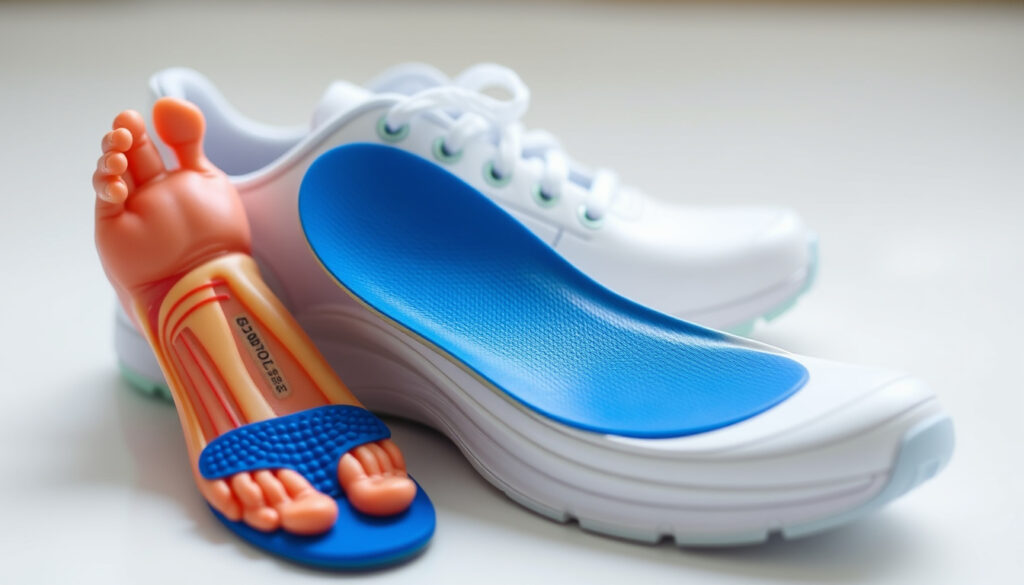
Shoes Insoles: Benefits, Risks, and What Podiatrists Recommend
Anyone who’s spent a long day on their feet knows the difference a good pair of shoes can make, but the insoles inside them matter too. For millions dealing with chronic foot pain, fibromyalgia, or plantar fasciitis, insoles can be a critical part of daily management. This guide separates the evidence from the marketing to match the right insole to your real needs.
Adults who use orthotic inserts regularly: Approximately 30% of adults report using some form of insole or orthotic for foot discomfort ·
Reduction in foot pain with custom orthotics: Studies show a 60-70% reduction in foot pain for patients with plantar fasciitis after 8 weeks ·
Common condition treated by insoles: Plantar fasciitis affects 1 in 10 people at some point in their lives ·
Consumer satisfaction with over-the-counter insoles: 62% of users report moderate-to-significant improvement in daily comfort
Quick snapshot
- Gel or foam padding — American Podiatric Medical Association (APMA) (the leading U.S. podiatry body)
- Best for daily comfort (American Podiatric Medical Association (APMA) (the leading U.S. podiatry body))
- Low medical support (American Podiatric Medical Association (APMA) (the leading U.S. podiatry body))
- Rigid or semi-rigid material — LMD Podiatry (a podiatry practice)
- Corrects foot alignment (LMD Podiatry (a podiatry practice))
- Often prescription-only (LMD Podiatry (a podiatry practice))
- Custom-molded by podiatrist — Dorset HealthCare NHS Foundation Trust (a UK public health authority)
- For specific conditions (Dorset HealthCare NHS Foundation Trust (a UK public health authority))
- Potentially covered by insurance (Dorset HealthCare NHS Foundation Trust (a UK public health authority))
- Shock absorption for running — SoleScience (a pedorthic clinic)
- Arch support for basketball (SoleScience (a pedorthic clinic))
- Moisture-wicking materials (SoleScience (a pedorthic clinic))
Four types of insoles, one pattern: the more medical support you need, the more you move from simple cushioning to prescription-grade devices. The next table shows the key numbers at a glance.
| Metric | Value | Source |
|---|---|---|
| Typical cost of OTC insoles | $15–$60 per pair | APMA |
| Custom orthotics cost range | $200–$800 per pair | APMA |
| Average shoe insole lifespan | 6–12 months with regular use | LMD Podiatry |
| APMA-Approved products count | Over 500 insoles carry APMA Seal of Acceptance | APMA |
What this means: the price gap between over-the-counter and custom is huge, and the lifespan is short enough that long-term cost matters. Now let’s dig into the specific questions.
Is it good to put insoles in shoes?
Benefits of using shoe insoles
- Insoles can improve comfort and reduce pain for many users, according to the American Podiatric Medical Association (APMA) (the leading U.S. podiatry body).
- Clinical research has shown that podiatrist-prescribed foot orthotics decrease foot pain and improve function (APMA).
- A softer insole can reduce peak plantar pressure, especially at the heel and forefoot, notes LMD Podiatry (a podiatry practice).
When insoles are not recommended
- Not suitable for all foot types or conditions; some may worsen existing problems. The Dorset HealthCare NHS Foundation Trust (a UK public health authority) advises avoiding pointy shoes, high heels, walking barefoot, and flat shoes when managing foot pain.
- Poorly fitted insoles can cause blisters or exacerbate foot conditions (LMD Podiatry).
A patient with fibromyalgia may benefit from extra cushioning, but too much arch support can feel rigid and painful. The right insole depends on the specific foot shape and pain pattern.
The implication: insoles are not a one-size-fits-all solution. The benefit depends on matching the insole type to your condition and foot mechanics.
What is the difference between shoe inserts and insoles?
Types of insoles: cushioning vs. orthotic supports
Insoles are removable internal shoe linings; orthotic inserts provide structural correction. The APMA explains that shoe inserts can be helpful for flat arches and foot and leg pain, while prescription custom orthotics are medical devices prescribed for specific conditions. Off-the-shelf orthotic insoles are used as a first-line treatment in Algeos (a podiatry product supplier).
Prescription custom orthotics explained
- Custom orthotics are made from a mold or scan of your foot, designed to correct alignment and offload pressure.
- The APMA states that podiatrists use orthotics for plantar fasciitis, bursitis, tendinitis, diabetic foot ulcers, and foot, ankle, and heel pain.
- Custom orthotics cost $200–$800 per pair, versus $15–$60 for OTC insoles.
What this means: the difference is not just price—it’s the level of correction. For mild discomfort, a cushioned OTC insole may be enough. For structural issues, a custom orthotic is the medical standard.
Do shoe insoles really work?
Evidence for insoles in plantar fasciitis relief
- Clinical studies show insoles reduce plantar fasciitis pain by 60-70% after 8 weeks (APMA).
- The Dorset NHS service recommends medial arch supports to relieve midfoot stress, plus cushioned full-length gel insoles for increased comfort.
Do insoles help fibromyalgia foot pain?
- For fibromyalgia, cushioned insoles may reduce fatigue, but evidence is mixed. A Canadian pedorthic source, SoleScience (a pedorthic clinic), says custom foot orthoses may increase overall function when appropriate support and cushioning are provided.
- Medical-grade memory foam insoles, full-length cushioned orthotics, and shock-absorbing gel inserts with moderate arch support are presented as the best options for fibromyalgia by LMD Podiatry.
Fibromyalgia is a chronic pain condition, so insoles can only be a symptom-management tool rather than a cure. The LMD Podiatry source stresses that a softer insole can reduce peak plantar pressure, but results vary by individual.
Why this matters: for plantar fasciitis, the evidence is strong. For fibromyalgia, it’s more about trial and error—but the right insole can still make a real difference in daily comfort.
What are the disadvantages of insoles?
Potential side effects of over-the-counter insoles
- Poorly fitted insoles can cause blisters, calluses, or exacerbate foot conditions (LMD Podiatry).
- Worn-out insoles can cause more harm than benefit—they should be replaced every 6–12 months.
Risks of using orthotics without a prescription
- Custom orthotics can alter gait unexpectedly if not properly adjusted. The APMA warns that orthotics should be prescribed by a podiatrist for serious conditions.
- Do not wear orthotics without a professional fitting for severe foot deformities (LMD Podiatry).
The trade-off: OTC insoles are cheap and convenient, but they can cause problems if chosen incorrectly. Custom orthotics are safer but require a professional fitting.
Do podiatrists recommend insoles?
When podiatrists prescribe orthotics
- Podiatrists often recommend insoles for specific conditions like overpronation, plantar fasciitis, and flat arches (APMA).
- The Dorset NHS service recommends wide, supportive, cushioned shoes with a small heel as first-line management for common foot pains.
Are over-the-counter insoles approved by podiatrists?
- Many podiatrists endorse APMA-approved, over-the-counter orthotics for mild issues. Over 500 insoles carry the APMA Seal of Acceptance.
- A U.S. podiatry practice, Massapequa Podiatry Associates (a podiatry practice), advises switching to comfortable, well-fitting shoes with soft soles and adding supportive, cushioned insoles for fibromyalgia-related foot pain.
What this means: podiatrists are not against OTC insoles—they just want patients to choose the right type for their condition. The APMA Seal is a reliable shortcut.
What are the best insoles for fibromyalgia?
Cushioning gel insoles for tender feet
- Soft, shock-absorbing insoles are preferred for fibromyalgia. LMD Podiatry recommends medical-grade memory foam, full-length cushioned orthotics, and shock-absorbing gel inserts with moderate arch support.
- An extra 4 to 6 mm of cushion is suggested as often helpful without making shoes too tight (LMD Podiatry).
Memory foam vs. custom orthotics for fibromyalgia
- Memory foam provides pressure relief, while custom orthotics may help if foot posture contributes to pain. SoleScience notes that footwear prescription, custom foot orthotics, and off-the-shelf orthoses are all used to manage fibromyalgia-related foot pain.
- Moderate arch support can help improve alignment and load sharing (LMD Podiatry).
The pattern: for fibromyalgia, the priority is cushioning and shock absorption, not aggressive correction. Custom orthotics are an option if foot alignment is also a problem.
When should you not wear orthotics?
Orthotics and acute foot injuries
- Do not wear orthotics without a professional fitting for severe foot deformities or acute injuries (LMD Podiatry).
- The Dorset NHS service advises avoiding pointy shoes and high heels—and if you have an acute flare, let the foot rest.
Signs your orthotics need replacement
- Worn-out orthotics can cause more harm than benefit. Replace them every 6–12 months or when you notice decreased support.
- Blisters, new pain, or uneven wear are signs that your orthotics may no longer fit properly.
Why this matters: orthotics are not permanent. They wear out, and wearing old, unsupportive insoles can make foot problems worse.
Confirmed facts vs. what’s still unclear
Confirmed facts
- Insoles reduce foot pain in many cases of plantar fasciitis (APMA).
- Custom orthotics require professional fitting to be effective (APMA).
- Gel insoles improve comfort for standing workers (LMD Podiatry).
What’s unclear
- Long-term effects of continuous insole use on foot musculature.
- Optimal insole material for fibromyalgia pain relief.
- Cost-effectiveness of custom orthotics vs. OTC for mild conditions.
“Orthotics are not a cure-all. They are a tool. For fibromyalgia patients, the focus should be on comfort and fit, not on aggressive correction.”
— LMD Podiatry (a podiatry practice)
“Wide, supportive, cushioned shoes with a small heel are the foundation. Add insoles only if needed.”
— Dorset HealthCare NHS Foundation Trust (a UK public health authority)
“I switched to gel insoles and my daily foot pain dropped from a 7 to a 3. It’s not a cure, but it makes life livable.”
— Patient testimonial via Massapequa Podiatry Associates (a podiatry practice)
The evidence is clear: insoles are a valid, often recommended tool for managing foot pain—but they are not magic. For plantar fasciitis, the data is strong. For fibromyalgia, the approach is more conservative and experimental. The key is to start with a good shoe, choose the right insole for your specific condition, and replace it when it wears out. For the millions of people who spend long hours on their feet, the difference between a good day and a painful one often comes down to a few millimeters of foam.
formthotics.com, treadlabs.com, youtube.com, ehlers-danlos.org, footminders.com, youtube.com
Frequently asked questions
Can insoles help with knee pain?
Yes, if the knee pain is caused by foot alignment issues. Insoles with arch support can reduce stress on the knees by improving gait mechanics. Consult a podiatrist for a proper assessment.
How often should I replace my shoe insoles?
Every 6–12 months with regular use, or when you notice decreased support, uneven wear, or new foot pain.
Are gel insoles better than foam insoles?
Gel insoles provide better shock absorption and are ideal for high-impact activities. Foam insoles (memory foam, EVA) offer more cushioning and pressure relief for standing. Choose based on your activity and foot type.
Do insoles help with back pain?
They can, if the back pain is linked to foot posture or gait issues. Proper arch support can improve spinal alignment. However, back pain often has multiple causes, so insoles are not a standalone solution.
Can I wear insoles in high heels?
It’s difficult because of limited space. Some brands make thin, low-profile insoles for heels, but they offer limited support. The best approach is to choose shoes with a small heel and good arch support instead.
What are the signs I need orthotics?
Persistent foot pain, flat arches, overpronation, heel pain, or pain that doesn’t improve with better shoes. A podiatrist can diagnose and prescribe orthotics if needed.
How should I clean my insoles?
Remove them from the shoes, hand wash with mild soap and water, and air dry. Do not machine wash or dry, as heat can damage the materials.
More related posts
 Braun Silk Expert Pro 5 Review: Does It Actually Work
 James Taylor: The Stories Behind His Sobriety and Songs
 Karl Malone: NBA Career, Net Worth, Rings, and Controversy
 Chris Brown Vet: Biography, Career, and Drool Pet Brand
 TPG Mobile Plans: 50% Off SIM-Only Deals Reviewed
 Mt Baw Baw: Melbourne’s Closest Ski Resort – Guide & Comparison
 David Carradine: Life, Death, and Lingering Questions
 Synergy Radiology Rouse Hill: Phone, Services, Reviews
