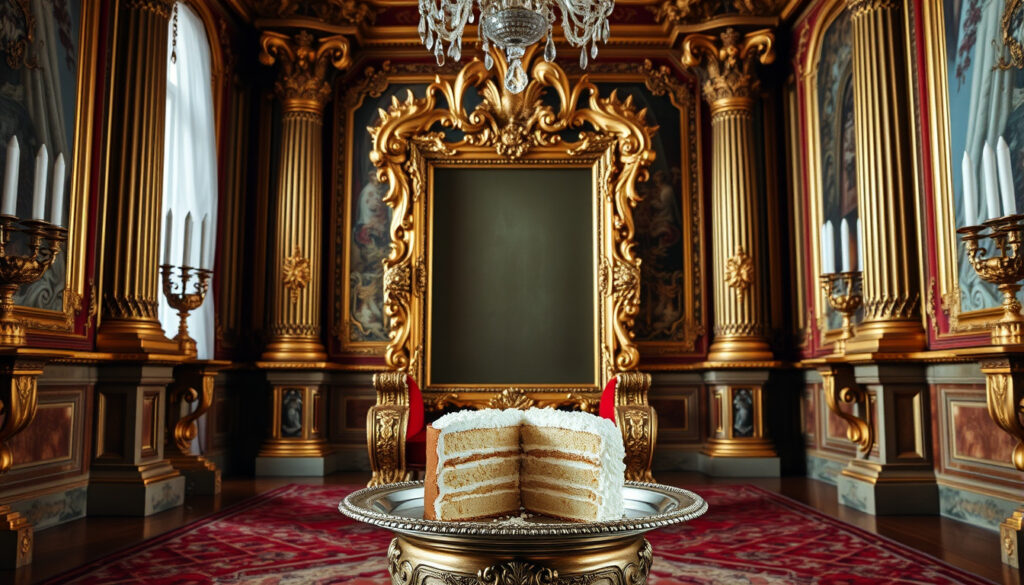
Marie Antoinette: Biography, Children, and the Myths
Few figures from history arrive wrapped in as much myth as the last queen of France. Her name alone still conjures images of extravagant gowns, towering wigs, and a legendary callousness about bread—but the story is far more complicated. This is a look at the real Marie Antoinette, the woman who became a lightning rod for revolutionary anger, and how the facts of her life compare to the stories that have survived.
Born: November 2, 1755, Vienna, Austria ·
Died: October 16, 1793, Paris, France (executed by guillotine) ·
Spouse: King Louis XVI of France (married 1770–1793) ·
Children: 4 (Marie Thérèse, Louis Joseph, Louis Charles, Sophie) ·
Reign as Queen: 1774–1792 ·
Famous remark: “Let them eat cake” (attributed, never proven)
Quick snapshot
- Born Archduchess of Austria in 1755, married Louis XVI at age 14 in 1770, executed by guillotine on October 16, 1793 (Britannica)
- Whether she ever said “Let them eat cake”, exact reasons for the unconsummated marriage, and the nature of her health issues (Wikipedia)
- 1774 becomes queen, 1785-1786 Diamond Necklace Affair, 1793 executed at Place de la Révolution (History.com)
- Continued scholarly revision, ongoing DNA analysis, and cultural portrayals (Château de Versailles)
Six key facts about Marie Antoinette’s life, from cradle to grave:
| Label | Value |
|---|---|
| Full name | Maria Antonia Josepha Johanna von Habsburg-Lothringen |
| Age at marriage | 14 years, 9 months |
| Years as queen | 18 (1774–1792) |
| Age at death | 37 |
| Known children | 4 (Marie Thérèse, Louis Joseph, Louis Charles, Sophie) |
| Burial site | Basilica of Saint-Denis, France |
Why was Marie Antoinette so famous?
Her role as Queen of France (1774–1792)
Marie Antoinette became queen at just 18 years old when her husband Louis XVI ascended the throne in May 1774 (Wikipedia). The Château de Versailles identifies her as one of the palace’s defining historical figures (Château de Versailles). As queen, she wielded significant influence over court appointments and patronage, which made her a natural target for critics.
Extravagant lifestyle and reputation
Her spending on fashion, gambling, and the Petit Trianon—a private château she had remodeled—fueled a legend of excess. While her personal expenditures were high, history from History.com notes she also gave considerable sums to charity, a side of her life often overlooked. The contrast between the lavish court at Versailles and the deepening poverty of ordinary French citizens made her an easy symbol of royal indifference.
Connection to the French Revolution
The Diamond Necklace Affair of 1785–1786 proved devastating. Though she was innocent of any role in the scandal—a cardinal was duped into buying an extravagant necklace in her name—the affair destroyed her public credibility. When the Revolution erupted in 1789, she embodied everything the revolutionaries hated. Her Austrian birth made her doubly suspect as a foreign influence inside the French court.
Marie Antoinette’s fame wasn’t built on policy or military victory—it was built on perception. In an era before mass media, she became the first French queen to be destroyed by a coordinated propaganda campaign, a pattern that would echo through centuries of political scandal.
The implication: Marie Antoinette’s celebrity was as much a weapon used against her as it was a consequence of her rank. The court of Versailles made her visible; the Revolution made her infamous.
How many babies did Marie Antoinette have?
Four children with Louis XVI
After seven childless years, the royal couple had four children (Britannica). The delay in producing an heir was a source of immense public scrutiny and personal distress.
- Marie Thérèse Charlotte (born December 19, 1778) — the eldest, and the only child to survive to adulthood (Wikipedia).
- Louis Joseph Xavier François (born October 22, 1781) — died at age 7 from tuberculosis on June 4, 1789 (Wikipedia).
- Louis Charles (born March 27, 1785) — died in prison at age 10, became known as Louis XVII by royalists who never recognized the Republic.
- Sophie Hélène Béatrix (born July 9, 1786) — died in infancy (The Sun).
Only Marie Thérèse survived to adulthood
The loss of three of her four children within a decade was devastating. Marie Thérèse was eventually released from prison in 1795 during a prisoner exchange and lived until 1851. She never had children of her own, ending the direct line from her parents.
Marie Antoinette’s fertility—or lack thereof—was a political issue as much as a personal one. For the 18th-century French monarchy, a queen’s value was measured in surviving heirs. The deaths of three children turned a personal tragedy into a political vulnerability that enemies exploited.
The pattern: royal reproduction was never private. Each pregnancy, each loss, each delay was public property, and Marie Antoinette’s body became a battlefield of Revolutionary propaganda.
What did ‘let them eat cake’ mean?
Origin of the phrase
The phrase is widely regarded as a myth, with no surviving documentation or eyewitness account placing it in Marie Antoinette’s mouth (BBC Bitesize). Britannica states flatly that there is absolutely no historical evidence she ever said “Qu’ils mangent de la brioche” or anything like it.
Historical context: bread shortages in 1789
The phrase “Let them eat cake” was meant to epitomize aristocratic indifference: when told the people had no bread, the queen supposedly suggested they eat cake instead. But the actual line—”Qu’ils mangent de la brioche”—first appears in Jean-Jacques Rousseau’s Confessions, written around 1767 (Britannica). Rousseau attributed it to a “great princess,” but he never named her.
Evidence she never said it
According to History.com, Marie Antoinette was about nine years old when Rousseau wrote that passage, making it chronologically impossible for her to have inspired it. The line was first directly pegged to her in 1843, a full 50 years after her death, by the writer Jean-Baptiste Alphonse Karr (BBC Bitesize). By then, she was already a myth.
The “Let them eat cake” story is a perfect example of how a falsehood can become more historically durable than the truth. No historian accepts it as real. But the phrase has lived longer than the queen herself because it feels true—it fits the story people wanted to tell about her.
The catch: the phrase tells us more about the 19th century’s need for a villain than it does about Marie Antoinette. She was long dead when the story attached to her name, but by then, the damage was done.
Was Louis XVI faithful to Marie Antoinette?
Marriage dynamics and reports of infidelity
Louis XVI has no confirmed extramarital affairs in historical records. The couple’s marriage was marked by an unusual seven-year delay in consummation, which both sides of the Revolution used to attack them—royalists blamed the queen’s supposed coldness, revolutionaries blamed the king’s inadequacy. The actual cause remains unclear; some historians suggest a medical issue or psychological inhibition that was resolved after the visit of Marie Antoinette’s brother, Holy Roman Emperor Joseph II, in 1777.
Historical evidence on Louis XVI’s personal life
For a king of France, Louis XVI was remarkably monogamous. Unlike his grandfather Louis XV, who maintained multiple official mistresses, the last Bourbon king left no evidence of infidelity. The marriage produced four children after 1778, suggesting the couple’s relationship improved significantly following the 1777 visit.
Rumors about Marie Antoinette’s relationships
Revolutionary pamphleteers produced an endless stream of slander claiming Marie Antoinette had affairs with both men and women, including the Swedish count Axel von Fersen and her close friend the Princesse de Lamballe. These accusations were almost certainly part of a deliberate propaganda campaign to dehumanize her before her trial (Wikipedia).
What this means: the accusations of infidelity against both spouses were primarily political weapons. The queen’s sexuality in particular was attacked because it was the easiest way to depict her as corrupt and foreign.
What happened to Marie Antoinette’s head after she died?
Immediate aftermath of execution
Marie Antoinette was executed by guillotine on October 16, 1793, at the Place de la Révolution in Paris (Britannica). According to historical accounts, her severed head was held up to the crowd by the executioner, a standard practice during the Reign of Terror. Her body was then taken to the Madeleine cemetery for burial.
Burial and exhumation
Her remains were thrown into a mass grave and covered with quicklime. In 1815, after the Bourbon restoration, her body—along with that of Louis XVI—was exhumed and reinterred in the Basilica of Saint-Denis, the traditional burial place of French monarchs (Wikipedia).
DNA identification in modern times
In 2000, a skull claimed to belong to Marie Antoinette was tested by French geneticists, but the results were inconclusive and widely disputed (Wikipedia). The official remains at Saint-Denis have not been subjected to modern DNA testing. The uncertainty means that, nearly 230 years later, the exact fate of her physical remains remains the subject of debate.
Marie Antoinette’s head was displayed as a trophy of revolutionary justice, but her body was treated with deliberate indignity—thrown into an unmarked pit, the final act of a campaign to erase everything she represented. The historical irony is that the monarchy’s restoration twenty years later brought her the dignified burial she was denied in death.
The trade-off: the Revolution wanted to demonstrate that even the queen’s body had no special sanctity. In doing so, they made her physical remains a symbol themselves—of the regime that destroyed her and, later, of the regime that tried to reverse its memory.
Key Timeline
The ten critical dates that define Marie Antoinette’s journey from Austrian archduchess to French queen to Revolutionary martyr:
| Date/Period | Event |
|---|---|
| November 2, 1755 | Marie Antoinette born in Vienna, Austria |
| May 16, 1770 | Married Louis XVI by proxy |
| 1774 | Louis XVI ascends throne; Marie becomes queen |
| 1777 | Visit of Holy Roman Emperor Joseph II; marriage consummated |
| December 19, 1778 | Birth of first child, Marie Thérèse Charlotte |
| 1785–1786 | Diamond Necklace Affair tarnishes reputation |
| July 14, 1789 | Storming of the Bastille; start of Revolution |
| October 5–6, 1789 | Royal family forced to move to Tuileries Palace, Paris |
| August 10, 1792 | Royal family imprisoned |
| October 16, 1793 | Marie Antoinette executed by guillotine |
| 1815 | Remains exhumed and reinterred at Saint-Denis |
Quotes and Sources
“Pardon me, sir, I did not do it on purpose.”
— Marie Antoinette’s last words (attributed), spoken to the executioner Sanson after stepping on his foot according to witness accounts (Wikipedia)
“Qu’ils mangent de la brioche.”
— Jean-Jacques Rousseau, Confessions (c. 1767), attributed to an unnamed “great princess” (Britannica)
Summary
Marie Antoinette remains a lens through which each era examines its own anxieties about power, gender, and inequality. The 18th century saw her as a foreign seductress bankrupting France; the 19th century saw her as a martyr; the 20th and 21st centuries have tried to separate the woman from the propaganda. For anyone looking at her story today, the choice is straightforward: accept the myth because it feels satisfying, or examine the evidence because the truth is more interesting, more tragic, and far more human, and Marie Antoinette’s legacy remains a battleground between fact and fiction.
bbc.co.uk, misbar.com, en.wikipedia.org, mentalfloss.com, memories-france.travel, britannica.com, youtube.com, historycollection.com
Frequently asked questions
Why did the French revolutionaries target Marie Antoinette?
She was attacked as a symbol of royal excess, as a foreign “Austrian” influence, and as a scapegoat for France’s financial problems. Revolutionary pamphleteers portrayed her as a decadent, manipulative queen to justify the overthrow of the monarchy.
What was the Affair of the Diamond Necklace?
A 1785 scandal in which a cardinal was tricked into purchasing an extravagant diamond necklace on behalf of the queen, who had never requested it. Though Marie Antoinette was innocent, the affair severely damaged her reputation by making her appear greedy and manipulative.
Did Marie Antoinette have any control over her public image?
Very little. She had no modern public relations apparatus, and the court at Versailles offered no formal way to counter the illegal pamphlets and songs circulating against her. By the time she tried to reshape her image, the damage was already done.
How did Marie Antoinette spend her days at Versailles?
Her daily life at Versailles followed strict court etiquette but also included pleasures: fashion, gambling, opera, and time at the Petit Trianon, where she could escape formal court life.
What happened to Marie Antoinette’s daughter?
Marie Thérèse Charlotte was the only child to survive the Revolution. She was released from prison in 1795 and lived in exile until the Bourbon restoration, dying in 1851 without having children.
Was Marie Antoinette ever popular with the French people?
Initially yes. Her arrival in France was celebrated, and her early years as dauphine were met with public enthusiasm. Her popularity began to decline after the birth of the heir was delayed, and collapsed entirely after the Diamond Necklace Affair and the onset of the Revolution.
How did Marie Antoinette’s Austrian heritage affect her reign?
Her Austrian birth made her a perpetual foreigner in French eyes. The Franco-Austrian alliance that brought her to France was deeply unpopular, and throughout her reign, she was suspected of prioritizing Austrian interests over French ones.
What is the historical consensus on her character today?
Modern historians largely view Marie Antoinette as a tragic figure—politically naive, personally extravagant but not uniquely cruel, and the victim of a propaganda campaign that vastly exaggerated her faults while ignoring her genuine hardships.
Related reading
- Betty Boop: Story, Controversy, Symbolism, and Public Domain — examines myth-making around another iconic female figure
- Harold Holt Disappearance: Facts, Theories, and Final Verdict — a fact-checking approach to a historical mystery
More related posts
 Jane Turner: Biography, Career, Kath & Kim, and Stage Roles
 Laverne Cox: Biography, Career, and Personal Life
 Jemima Goldsmith: Biography, Religion, Net Worth
 Dyson Heppell: From Essendon Captain to Collingwood Coach
 Damien Martyn: Truth Behind the Coma Rumor and His Life Now
 Linda Cardellini: Ethnicity, Age, Height, Movies & FAQs
 Rob Mills: Career, Relationships, and Georgie Tunny
 Joshua Brown: Melbourne Childcare Case Facts
