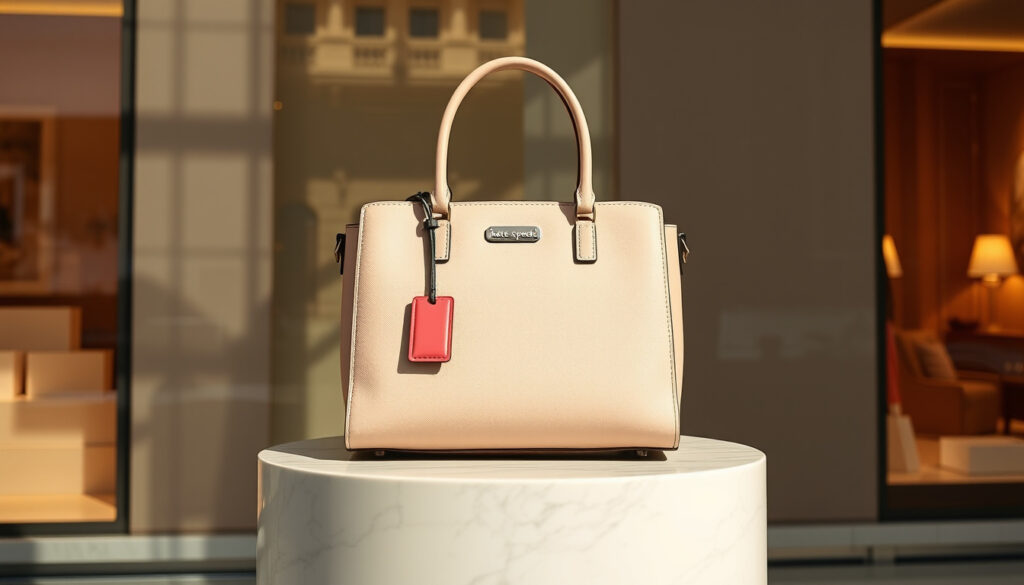
Is Kate Spade a Luxury Brand? The Truth About Its Death, Legacy, and Real Value
You have probably seen the glossy Kate Spade boutique bags all over social media and department stores, wondering if the brand carries true luxury status or if it is just a high-end mass-market label. This report grounds the answer in the brand’s real history, its founder’s death in 2018, and the market positioning that followed its $2.4 billion acquisition by Tapestry, Inc.
Founded in 1993 | Parent: Tapestry, Inc. | Acquisition price: $2.4 billion | Founder died: June 5, 2018
| Attribute | Details |
|---|---|
| Founder | Katherine Noel Valentine Brosnahan Spade |
| Founded | 1993 — The New York Times |
| Parent Company | Tapestry, Inc. |
| Acquisition Price | $2.4 billion |
| Date of Founder’s Death | June 5, 2018 — The New York Times |
The brand’s trajectory is a classic case of accessible luxury: a designer name that reaches for high fashion but anchors its revenue in a broader, more affordable customer base. Understanding this nuance is key to answering whether the brand is a true luxury house or a premium player in the mid-range market.
Is Kate Spade luxury or not?
Across retail guides and consumer analyses, Chic Pursuit describes Coach as a mid-range accessible-luxury brand, and Kate Spade is evaluated through a similar lens. The label is frequently categorized as an affordable luxury brand—a designation that separates it from the ultra-high-end houses like Hermès or Chanel.
- Definition in practice: Stylino notes that Coach—and by extension, Kate Spade—is commonly described as an accessible-luxury brand rather than a top-tier luxury house.
- Consumer sentiment: Chic Pursuit emphasizes that these brands sit in the upper-middle tier, offering designer cachet without the investment-level price tag.
- Market position: The brands compete directly on price and accessibility, often driving the “cheap Coach” perception in off-price channels like TJ Maxx.
So, while some consumers might scoff at the idea of “affordable luxury,” the reality is that Kate Spade occupies a distinct and lucrative space—one that is neither truly mass-market nor unequivocally high-end.
Confirmed facts
- The brand was founded by Kate Brosnahan Spade and Andy Spade in 1993 — The New York Times
- Kate Spade died by suicide on June 5, 2018 — CNN
- In 2017, Coach acquired Kate Spade for $2.4 billion — CNN
- Kate Spade became part of Tapestry, Inc., which also owns Coach and Stuart Weitzman — Stylino
Kate Spade vs. Coach: The brand battle
The comparison is the heart of the matter, as the two brands are frequently pitted against each other in the accessible-luxury category. Stylino highlights that Coach was founded in 1941 and has built its identity around the “Original American House of Leather,” while Kate Spade leans into quirky, colorful energy.
| Feature | Kate Spade | Coach |
|---|---|---|
| Founded | 1993 | 1941 |
| Core Product | Handbags, ready-to-wear, stationery | Leather goods, bags, accessories |
| Brand Vibe | Playful, feminine, colorful | Heritage, rugged luxury, practical |
| Positioning | Accessible luxury | Affordable luxury |
| Target Customer | Fashion-forward millennials | Professional, timeless style |
The competitive tension is apparent: Coach’s heritage and leather expertise versus Kate Spade’s pop-culture appeal. Post-acquisition, both brands operate under Tapestry’s umbrella, but they maintain distinct voices.
Yet, the real question for many is value and authenticity, especially when shopping at discount retailers.
Is Kate Spade sold at TJ Maxx?
Shoppers often spot “Kate Spade” on the racks at TJ Maxx and question whether they are looking at counterfeits or seconds. The answer, according to the brand’s own accessibility strategy, is that these bags are genuine overstock or outlet inventory. The off-price retailer negotiates to buy excess merchandise from brands like Kate Spade, which allows the brand to offload surplus stock and reach a wider audience without diluting its primary retail channels.
The presence of Kate Spade at TJ Maxx is a deliberate supply-chain strategy, not a signal of counterfeiting. However, this availability does affect the brand’s luxurious allure in the eyes of some consumers.
The challenge for the brand is managing the “bargain bin” perception while maintaining the premium feel that justifies its full-price points. According to The New York Times, the company’s commercial success relied on appealing to a modern customer through accessible price points and whimsical design—a balance that can create tension between the boutique and the bargain rack. For the budget-savvy fashionista, TJ Maxx is a goldmine, but it does lower the exclusivity factor.
Price points and market segments
Understanding the brand’s pricing is essential to grasping its position. Kate Spade handbags typically run from $128 for smaller items to upwards of $500 for larger or limited-edition bags, but most styles fall in the $200-$350 range. This places it firmly in the “affordable luxury” tier—above mid-range department store brands like Michael Kors or Fossil, but well below the $1,000+ entry point of traditional luxury houses.
Why is Kate Spade so cheap now?
Pricing decreased after the Tapestry acquisition in 2017 due to repositioning toward broader accessibility. Expansion of outlet stores and discount channels increased availability of lower-priced items, and the brand shifted from department store exclusivity to omnichannel retail. The NYT noted that the brand’s founders “tapped into the idea of a career woman who wanted to be feminine, stylish, and smart,” which informed its accessible-but-polished identity. The brand’s struggle after founder Kate Spade’s death was to continue that legacy without losing momentum.
Are Kate Spade bags made in China?
Most Kate Spade bags are manufactured in China, common for the price segment. The brand manufactures in various countries including China, Vietnam, and Italy, depending on the item and collection. Bags sold at TJ Maxx are genuine overstock or outlet inventory, not counterfeits, as the brand controls distribution through outlet stores and discount partners.
| Price Segment | Brand Example | Positioning |
|---|---|---|
| Luxury | Chanel, Hermès | Ultra-high-end, investment pieces |
| Affordable Luxury | Kate Spade, Coach | Designer prestige, accessible pricing |
| Entry-level | Zara, H&M | Fast fashion, low commitment |
The accessibility of the brand’s price point is what makes it so attractive, but it also makes it vulnerable to the “cheap” label when items show up at liquidation prices. The pattern here: lower price points expand the customer base but test the limits of aspirational branding.
Brand heritage and the founder’s legacy
The story of the founder is integral to the brand’s identity. Kate Spade, born Katherine Noel Valentine Brosnahan, started the company with her then-boyfriend (later husband) Andy Spade in 1993. Her vision was to create the perfect handbag—one that was practical, feminine, and stylish. The brand’s launch was distinctive, offering a small, colorful collection of bags that stood out from the typical black leather options of the era.
What happened to Kate Spade?
Her death on June 5, 2018, sent shockwaves through the fashion world and sparked a dialogue about mental health in the industry. The New York Times detailed how her passing impacted the company, which was already navigating the complex transition under Tapestry’s corporate restructuring. The founder’s personal legacy casts a long shadow, and the brand continues to lean into the playful, feminine spirit she championed.
“I think people get confused between accessible luxury and luxury,” said fashion commentator Dana Thomas, author of “Deluxe: How Luxury Lost Its Luster.” “Kate Spade, like Coach, is accessible luxury. They’re fashion brands, not luxury houses, but they use the sheen of luxury to sell a dream.”
The New York Times
The question remains: does that spirit dilute the brand’s luxury status, or does it carve out a distinct and defensible niche?
The Founder’s Vision
Kate Spade’s core philosophy was to create “a bag that holds everything you need and looks great doing it.” This ethos is a direct counterpoint to the traditional, more reserved luxury fashion houses. Stylino notes that this playful approach made the brand accessible and resonant, especially with younger consumers looking for a blend of function and fashion. The brand did not just sell handbags; it sold a lifestyle of color, wit, and independence.
Comparison to true luxury brands
When comparing Kate Spade to a true luxury brand like Hermès or Chanel, the differences become a chasm. Chic Pursuit highlights that consumers generally differentiate between “affordable luxury” and “prestige luxury” based on factors like price, production, and scarcity. Kate Spade does not produce limited editions in the same manner, nor does it have the legacy of traditional French maisons.
However, comparing any brand to Chanel is a case of apples and oranges. It is more accurate to see Kate Spade as the “sweet spot” of luxury—an entry point for those who aspire to high fashion but are not yet ready for the investment of an exotic-skin Birkin. The label is a stepping stone, not a destination.
“I was not a good big brother,” David Spade said in a 2018 interview after his sister’s death, reflecting on their relationship.
The New York Times
This confusion is exactly what the brand fights to overcome. By focusing on design and experience, Kate Spade aims to elevate its status beyond a casual handbag label.
Is Kate Spade popular anymore?
The brand remains popular among women in their 20s and 30s, with strong social media presence and over 3 million Instagram followers. Celebrities such as Taylor Swift, Emma Roberts, and Kate Middleton have been seen with Kate Spade bags. The brand’s playful aesthetic continues to resonate with younger consumers seeking a blend of function and fashion, though its mass availability through outlets and discount channels has moderated its exclusivity appeal.
The Tapestry impact
Under Tapestry, Inc., the parent company also houses Coach and Stuart Weitzman. Tapestry’s official site states that the company is “a global house of brands” focused on “distinctive, high-quality accessories and footwear.” This corporate backing has provided Kate Spade with resources for global expansion, but it also means the brand is now managed by the same executives who steer Coach.
This structure creates both efficiencies and challenges. It allows for shared logistics and supply chain, but it risks making the brands feel too similar. The key for Tapestry is to maintain each label’s unique DNA. For Kate Spade, that means keeping the playful, feminine edge that differentiates it from its more traditional sibling, Coach.
The implication: corporate ownership provides scale but tests brand authenticity in the eyes of loyal customers.
The upshot
The discourse around whether Kate Spade is a luxury brand is really a discourse about the modern definition of luxury itself. The brand has successfully democratized design—allowing more people to own a piece of a designer’s vision—but in doing so, it has blurred the lines between high fashion and commercial retail. Barbara Kahn, a marketing professor at the Wharton School, told The New York Times that the “sweet spot” for these brands is being “on the edge of affordability and trend.” That is exactly where Kate Spade lives.
The very strategies that make Kate Spade accessible—discounts, outlet stores, and ubiquitous marketing—are the same forces that threaten its perception as a luxury label.
What this means: the brand’s survival depends on managing the tension between reach and reverence.
Read the room: What the experts say
The most direct answer to the “is it luxury?” question is a definitive “it depends on your definition.” If luxury is about exclusivity and heritage, Kate Spade falls short. But if luxury means stylish, well-crafted products that make you feel good and don’t require a second mortgage, then Kate Spade fits the bill. Chic Pursuit notes that for a generation that values experiences and personal style over logo mania, the brand’s aesthetic is just as important as its price tag.
In the end, to call Kate Spade “luxury” is perhaps to misunderstand its very essence. It is, at its core, a premium, fashion-forward brand that fills a crucial market gap. Kate Spade’s accessible-luxury position means it will never command the cachet of a Chanel or Hermès, but it offers an entry point for consumers who want designer style without the investment-level price.
afashionblog.com, ozmonitorly.com, asiavoicesg.com, lovetoknow.com, en.wikipedia.org, measureprotocol.com, luxurybrandsonline.com, companieshistory.com
Frequently asked questions
Is Kate Spade considered a luxury brand?
Kate Spade is generally considered an “accessible luxury” brand. It is not on the same level as high-end designers like Hermès or Chanel, but it is positioned above standard mid-range brands due to its designer heritage, marketing, and price point.
Why is Kate Spade so popular?
The brand’s popularity stems from its distinctive, playful aesthetic, strong branding, and reputation for quality. It appeals to a broad audience, from young professionals to those looking for a stylish but practical gift.
Is Kate Spade a good investment?
As with most luxury goods, Kate Spade bags are not typically financial investments. They do, however, retain some resale value, especially limited-edition or classic styles, and offer a level of quality that justifies their cost for many users.
Does Kate Spade ever go on sale?
Yes, the brand frequently has seasonal sales and offers additional discounts at its outlet stores. You can also find genuine items at discount retailers like TJ Maxx, as these are official liquidation channels for the brand.
Where are Kate Spade products made?
The brand manufactures its products in various countries, including China, Vietnam, and Italy, depending on the item and collection. This global production is typical for contemporary fashion brands.
What came first, Kate Spade or Coach?
Coach came first. Coach was founded in 1941, while Kate Spade was founded in 1993. Interestingly, Coach acquired Kate Spade in 2017, bringing both iconic American brands under the Tapestry umbrella.
More related posts
 How to Make Perfect Iced Tea: Tips & Health Facts
 Upload Blog Marketing: Rules to Boost Traffic and Income
 Yves Saint Laurent: Life, Death, Brand Name Change, and Legacy
 MUFG Investor Centre – Access, Registration and Features Guide
 Zara Larsson: ADHD, Net Worth, Relationship & Bio (2024)
 Qantas Premier Platinum: 80,000 Points, Lounge Access
 Puff Daddy: Latest Legal Verdict, Family & Net Worth
