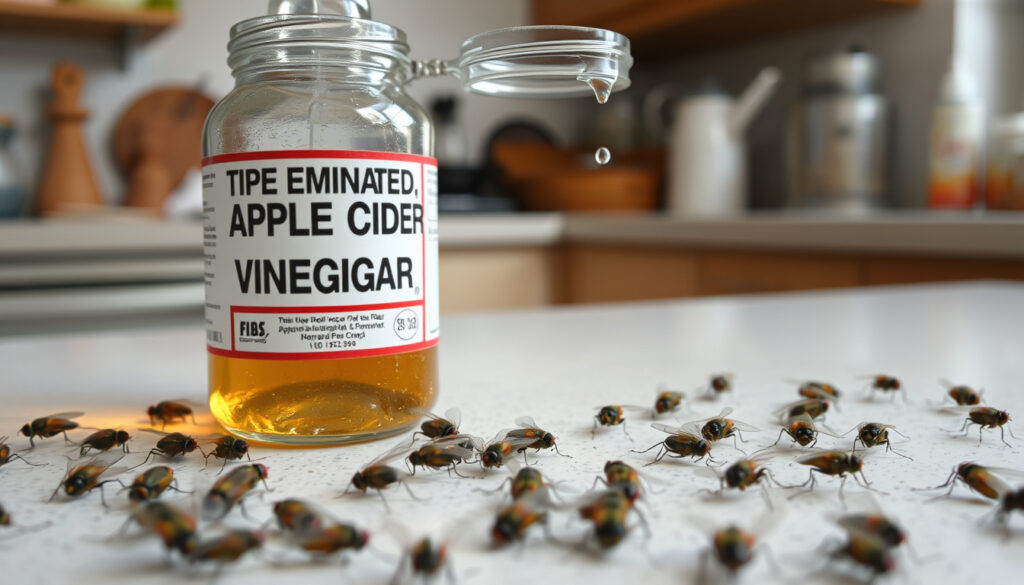
How to Get Rid of Fruit Flies Fast: Permanent Solutions
If you’ve walked into your kitchen and found a cloud of tiny flies around the fruit bowl, you know the frustration — a single female fruit fly can lay up to 500 eggs, according to entomology sources, so a few flies can become a swarm in days. This guide combines pest control expertise from university extension programs and tested DIY methods to help you eliminate fruit flies fast and keep them from coming back.
Adult fruit fly lifespan: 8–10 days ·
Eggs per female: Up to 500 ·
Time from egg to adult: 8–10 days ·
Attracted to: Fermenting fruit
Quick snapshot
- Apple cider vinegar + dish soap (Pesticide Education Center)
- Wine or beer bait (Instructables)
- Commercial sticky traps (UC IPM)
- Clove and lemon (Homesteading Family)
- Basil and peppermint (Homesteading Family)
- Essential oils spray (Pesticide Education Center)
- Store fruit in fridge (Pesticide Education Center)
- Seal cracks and gaps (UC IPM)
- Inspect produce for larvae (UC IPM) (Pesticide Education Center)
Four key metrics tell the story: the adult fruit fly lives just 8–10 days, but a single female can lay up to 500 eggs in that window, making quick action essential. The table below pulls together the core facts from entomology research and pest management guides.
| Metric | Value |
|---|---|
| Lifespan of adult fruit fly | 8–10 days |
| Eggs per female | Up to 500 |
| Common breeding sites | Overripe fruit, drains, damp mops, trash bags |
| Optimal temperature for reproduction | 75–85°F (24–29°C) |
What Gets Rid of Fruit Flies Fast?
How to make an apple cider vinegar trap
- Fill a small jar with ¼ cup of apple cider vinegar or wine (Pesticide Education Center).
- Add a few drops of dish soap to break surface tension (Homesteading Family).
- Cover with plastic wrap, secure with a rubber band, and poke small holes (Instructables).
- Place the trap near infested areas; replace every 2–3 days.
The vinegar scent lures flies in, and the soap ensures they drown rather than crawl out. This is the most widely recommended DIY method across pest control guides.
What kills fruit flies immediately?
- Commercial flying insect sprays can kill on contact, but they don’t address the source.
- Vacuuming adult flies with a handheld vacuum works for quick visible reduction.
- Rubbing alcohol in a spray bottle also kills on direct contact.
None of these eliminate the eggs or larvae hiding in drains or produce, so they’re only part of the solution.
How to get rid of fruit flies in 12 hours
Some DIY guides report a noticeable drop in fruit fly activity within about 12 hours after placing multiple traps (Weekend at the Cottage). The key is to combine traps with immediate sanitation: throw away overripe fruit, wipe down counters, and clean the sink drain. Without removing breeding sites, the trap alone will not stop new flies from emerging.
Traps catch adults, but eggs and larvae in your drain or fruit bowl will keep hatching. True knockdown in 12 hours requires removing all organic matter where flies can reproduce.
The implication: trapping alone won’t stop the infestation if breeding sites remain.
How Do I Get Rid of Fruit Flies Inside My House?
Indoor trapping methods
- Set up apple cider vinegar traps (see above) in the kitchen, near trash cans, and by houseplants.
- Use sticky yellow traps for monitoring and catching flying adults (UC IPM).
- Try a yeast-based trap: mix warm water, a teaspoon of yeast, and sugar (Pesticide Education Center).
Cleaning infested areas
- Discard or refrigerate all overripe fruit and vegetables (UC IPM).
- Scrub drains and garbage disposals with a brush and baking soda or enzyme cleaner (UC IPM).
- Wipe down countertops and mop floors to remove sugary residues.
- Empty and clean trash bins regularly.
Sealing entry points
- Install fine mesh screens on windows and doors.
- Seal cracks around baseboards and pipes.
- Keep doors closed, especially near compost or trash areas.
Fruit flies are small enough to enter through gaps as narrow as 1/16 inch, so sealing openings helps reduce new arrivals.
Skipping drain cleaning is the most common mistake. A single drain can harbor hundreds of eggs that hatch and repopulate your kitchen within days.
The pattern: cleaning and sealing entries address the root cause.
What Scents Keep Fruit Flies Away?
Essential oils that repel fruit flies
Spray a mixture of water with a few drops of lemongrass or eucalyptus essential oil around trash bins and fruit bowls. While these methods are widely shared on DIY blogs, no peer-reviewed studies confirm their effectiveness as standalone repellents. Use them as a complement to sanitation, not a replacement.
Clove and lemon method
Combine cloves and lemon: stick whole cloves into a halved lemon and place it on the counter. Anecdotal reports suggest this may deter fruit flies, but scientific evidence is lacking.
Herbs like basil and mint
Place basil plants near kitchen windows — anecdotal reports suggest fruit flies avoid the scent.
The catch: repellents may help but shouldn’t replace cleaning and trapping.
What Causes Fruit Flies in the House?
Common breeding sites
- Overripe or rotting fruit and vegetables (UC IPM).
- Drains, garbage disposals, and damp mops (UC IPM).
- Trash bins with food scraps and recycling containers with residue.
- Houseplant soil with decaying organic matter.
Why infestations happen suddenly
Fruit flies reproduce rapidly: a female can lay up to 500 eggs, and the life cycle from egg to adult takes as little as 8 days in warm conditions. That means a small contamination on a single banana can explode into a visible swarm within a week.
Seasonal patterns
Infestations peak in late summer and early fall when fresh produce is abundant and homes are warmer. However, fruit flies can breed year-round indoors if conditions are favorable.
You can eliminate flies quickly with traps, but unless you remove the breeding source, you’ll be setting traps forever. Prevention saves more time and frustration.
The catch: you can’t just trap; you must remove the source.
How to Prevent Fruit Flies from Returning
Regular cleaning routines
- Wipe countertops and tables daily with a disinfectant.
- Clean sink drains once a week with a drain brush or baking soda and vinegar (UC IPM).
- Take out trash and recycling every 2–3 days, especially in summer.
Storing produce properly
- Refrigerate all ripe fruit and vegetables (Pesticide Education Center).
- Store bananas, tomatoes, and other produce that ripens at room temperature in a bowl covered with a cloth or mesh.
- Inspect produce from the store for damage or larvae before bringing it inside.
What this means: prevention is an ongoing routine that homeowners must follow to avoid reinfestation.
Confirmed Facts vs. What’s Unclear
Confirmed facts
- Apple cider vinegar traps effectively capture fruit flies (Homesteading Family)
- Removing food sources is the most important step (UC IPM)
- Fruit flies are attracted to fermenting organic matter (UC IPM)
What’s unclear
- Effectiveness of essential oils as a standalone repellent varies
- Whether ultrasonic devices work against fruit flies
- Clove and lemon as a repellent (anecdotal, no peer-reviewed evidence)
- Basil as a repellent (anecdotal, no peer-reviewed evidence)
“The first step in learning how to get rid of fruit flies in the home or workspace is to eliminate their food source.”
— Rentokil Pest Control
“A DIY fly trap works by baiting fruit flies with a sweet-smelling, fermenting liquid, luring them into a trap where they’re then stuck and drown.”
— BBC Good Food
For any homeowner dealing with a sudden fruit fly outbreak, the choice is clear: combine immediate traps with thorough sanitation, or risk a cycle of reappearing swarms. The fastest results come from attacking both the adults and the eggs in drains and produce. Without that dual approach, you’ll be fighting the same battle every week.
For a comprehensive guide on tackling these pests, check out proven methods for fruit fly removal that detail additional DIY traps and prevention strategies.
Frequently asked questions
Can fruit flies live in drains?
Yes. Drains and garbage disposals provide moisture and organic matter, making ideal breeding sites. Regular cleaning with a brush and baking soda is essential.
Do fruit flies bite humans?
No. Fruit flies are not blood-feeders; they feed on fermenting fruit and vegetable matter.
How fast do fruit flies reproduce?
A female can lay up to 500 eggs, and the life cycle from egg to adult takes as little as 8–10 days under warm conditions.
What is the lifespan of a fruit fly?
Adult fruit flies live about 8–10 days, though cooler temperatures can extend that slightly.
Are fruit flies attracted to light?
Fruit flies are more attracted to smell (fermentation) than light, but they may gather near windows in search of food sources.
Will fruit flies go away on their own?
Not if a food source remains. Without intervention, they will continue breeding until all organic matter is removed or consumed.
Is bleach effective against fruit flies?
Bleach can kill adult flies and sanitize surfaces, but it does not penetrate organic film in drains as effectively as enzyme cleaners or physical scrubbing.
More related posts
 St Sebastian: Patron Saint, Martyr, and Gay Icon
 Gorge Wildlife Park: Koala Cuddles, Animals & Guide
 Warren Beatty: Life, Career, and Marriage to Annette Bening
 Booboo Stewart Biography: Age, Movies, and Personal Life
 Audrey Nuna Golden: Real Voice, Oscar Win & Speech Cut-Off
 Master Chief: Who is John-117? Rank, Abilities & Legacy Explained
 Bob Vylan: Age, Net Worth, Real Name, Fred Perry
 Cooks Hill Family Practice – Location Services and Booking Guide
