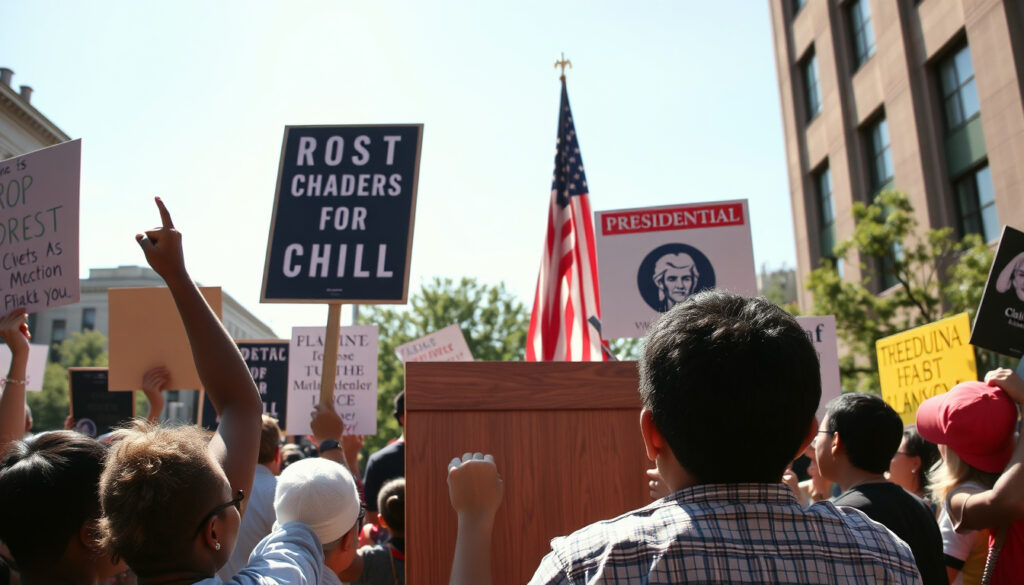
Jesse Jackson: Civil Rights Activist and Presidential Candidate
Few American lives trace the arc of the civil rights era as completely as Jesse Jackson’s: born in Greenville, South Carolina, in 1941, he marched with Martin Luther King Jr., built the Rainbow PUSH Coalition, and ran twice for the Democratic presidential nomination (Encyclopaedia Britannica — biographical reference). The confirmed facts and the unresolved questions — about his health, his controversies, and the rumor that he was related to Michael Jackson — both deserve a clear read.
Full name: Jesse Louis Jackson (né Burns) ·
Born: October 8, 1941 ·
Died: February 17, 2026 ·
Known for: Civil rights activism, presidential campaigns ·
Organization: Rainbow PUSH Coalition ·
Presidential runs: 1984, 1988
Quick snapshot
- Born Jesse Louis Burns on October 8, 1941, in Greenville, South Carolina (National Park Service (civil rights archival profile)).
- Ran for the Democratic presidential nomination in 1984 and 1988 (Encyclopaedia Britannica (biographical reference)).
- Died February 17, 2026, in Washington, D.C. (NPR (public radio obituary)).
- Exact cause of death has not been publicly confirmed.
- Net worth at death is not independently verified.
- Final historical assessment of his legacy is still being written.
- 1971 — founded Operation PUSH (Rainbow PUSH Coalition (official organization site)).
- 1996 — merged Operation PUSH with the National Rainbow Coalition (Wikipedia (encyclopedic reference)).
- 2017–2026 — Parkinson’s diagnosis, then death in Washington, D.C. (NPR — public radio obituary). (Rainbow PUSH Coalition (official organization site))
- Rainbow PUSH Coalition continues its advocacy work (Rainbow PUSH Coalition — current programming).
- Historians and biographers are reassessing Jackson’s record.
- Unresolved questions about the organizations’ finances remain open.
The biographical baseline: birthplace, education, family, and the organization Jackson built — each row below holds a fact that can be checked.
| Field | Value |
|---|---|
| Full name | Jesse Louis Jackson (born Jesse Louis Burns) |
| Born | October 8, 1941, Greenville, South Carolina |
| Died | February 17, 2026, Washington, D.C. |
| Education | North Carolina A&T University; Chicago Theological Seminary |
| Spouse | Jacqueline Lavinia Brown (m. 1962) |
| Children | Five, including Jesse Jackson Jr. (Wikipedia — family details) |
| Key organization | Rainbow PUSH Coalition |
What illness does Jesse Jackson suffer from?
Jackson’s last decade was shaped by Parkinson’s disease, a diagnosis he chose to make public.
Diagnosis and public disclosure
- Jackson was diagnosed with Parkinson’s disease in 2017 and disclosed the diagnosis the following year (NPR — public radio obituary).
- Parkinson’s is a progressive neurological condition; in Jackson’s case it slowed his gait and made extended public speaking harder over time.
Impact on his public life
- He continued to appear at churches, rallies, and coalition events after the diagnosis, even as the disease’s effects became visible on camera.
- His death on February 17, 2026, in Washington, D.C., closed a public career that spanned more than six decades.
Parkinson’s forced Jackson to slow down physically, but the visibility he maintained became part of his final public message: the cause outlasts the body.
The pattern: how a leader ages in public becomes part of the legacy. Jackson chose visibility over retreat, and that choice shaped the final chapter as much as any policy position.
Why is Jesse Jackson so famous?
Jackson earned fame the slow way — through arrests, marches, boycotts, and two campaigns that forced a major political party to widen its stage.
Early activism with Martin Luther King Jr.
- While a student at North Carolina A&T, Jackson led protests to desegregate Greensboro’s theaters and restaurants; he joined the Southern Christian Leadership Conference and marched in Selma, Alabama, in 1965 (National Park Service — civil rights archival profile).
- By 1967 he was national director of Operation Breadbasket, which pushed for jobs and economic opportunity for Black workers; a Chicago voter-registration drive he organized in 1983 was credited with helping Harold Washington become the city’s first Black mayor (NPR — public radio obituary).
Founding the Rainbow PUSH Coalition
- After leaving the SCLC in 1971, Jackson founded Operation PUSH — originally “People United to Save Humanity” — and later created the National Rainbow Coalition, the two organizations that merged in 1996 into the Rainbow PUSH Coalition.
Running for president in 1984 and 1988
- Jackson was the second Black American to mount a nationwide campaign for a major-party presidential nomination, after Shirley Chisholm (Biography.com (celebrity biography)).
- His 1984 campaign drew about 3.5 million primary votes and finished third behind Walter Mondale and Gary Hart (Biography.com — campaign data).
- In 1988 he ran again, won primaries and caucuses across the country, and pushed the Democratic Party to broaden its platform on minority and working-class issues (PBS Frontline (documentary journalism)).
International hostage negotiation
- Jackson’s National Rainbow Coalition united constituencies around racial, economic, and human-rights issues, and his personal diplomacy helped secure the release of hostages and POWs in Syria, Iraq, and elsewhere (PBS Frontline — foreign-policy profile).
The implication: Jackson normalized the idea that a Black candidate could compete for a major-party nomination and move the party’s agenda leftward — not as a symbol, but as a strategist counting delegates.
Why was Jesse Jackson controversial?
The same platform that amplified Jackson’s crusades also recorded his stumbles in real time.
Political and religious controversies
- In 1984, Jackson referred to New York City as “Hymietown,” a slur that drew national condemnation and forced a public apology; the same campaign faced a separate financial controversy over an undisclosed loan (Encyclopaedia Britannica — biographical reference).
Personal scandals
- Jackson publicly acknowledged an extramarital affair and later paid child support after a paternity suit (Wikipedia — encyclopedic reference).
- His willingness to meet with political adversaries, including President Donald Trump, drew criticism from allies who saw the engagement as legitimizing figures they opposed.
Public statements
- The recurring pattern: an offensive remark or personal lapse, a public apology, a brief retreat, then a return to the movement.
The moral authority that made Jackson a national conscience was fragile: a slur or a secret could undo weeks of organizing, because the media measured him by the standard he had set.
The catch: Jackson demanded that America live up to its ideals, which meant every failure of his own was judged against the very standard he had set.
Is Jesse Jackson related to Michael Jackson?
The shared surname creates the question; the answer is simpler than most people expect.
Family connection
- Jesse and Michael Jackson were not blood relatives, though their acquaintance and shared charity appearances kept the rumor alive for years (Biography.com — celebrity biography).
- Jesse Jackson’s son, Jesse Jackson Jr., who followed his father into public life, is also unrelated to the pop star.
Common misconceptions
- The confusion is understandable — two iconic public figures named Jackson — but the two families have no documented connection.
- The rumor persists mainly because the surname dominates both stories: entertainment royalty and civil rights royalty, with no family tree linking them.
The pattern: celebrity name math is a shortcut the brain trusts, but a shared surname is not a shared tree.
What is the Rainbow PUSH Coalition?
The organization was Jackson’s answer to a practical question: how to make protest last past the march.
Mission and history
- The Rainbow PUSH Coalition is a nonprofit social justice organization founded by Jackson, based in Chicago, that focuses on civil rights, economic empowerment, and political activism and operates chapters nationwide (Rainbow PUSH Coalition — official organization site).
- Its direct roots go back to Operation PUSH, which used economic boycotts against corporations accused of discriminating against Black people (National Park Service — civil rights archival profile).
- In 1996, Operation PUSH merged with the National Rainbow Coalition to form the Rainbow PUSH Coalition, joining economic justice work with issue-based coalition politics (Encyclopaedia Britannica — biographical reference).
Current activities
- The coalition continues Jackson’s core strategy: voter education, economic-integrity campaigns, and leadership training rooted in the same organizing logic.
- Its public role now centers on defending voting rights and pressing corporations on diversity commitments — the dual politics-and-economics approach Jackson pioneered.
The boycott model gave Black communities a lever that speeches lacked: corporate revenue, which made discrimination financially costly.
The result: a permanent counterweight to political backsliding, built on the assumption that representation without economic power is fragile.
Key dates in Jesse Jackson’s life
Jackson’s chronology runs from the segregated South to the national stage — a half-century of public life compressed into the dates below.
- — Jesse Louis Burns born in Greenville, South Carolina (National Park Service — civil rights archival profile).
- — Becomes active in the civil rights movement and works with Martin Luther King Jr. (National Park Service — civil rights archival profile).
- — Founds Operation PUSH (Rainbow PUSH Coalition — official organization site).
- — First presidential campaign for the Democratic nomination (Encyclopaedia Britannica — biographical reference).
- — Second presidential campaign; wins 13 primaries (PBS Frontline — documentary journalism).
- — Merges Operation PUSH with the National Rainbow Coalition (Wikipedia — encyclopedic reference).
- — Diagnosed with Parkinson’s disease (NPR — public radio obituary).
- — Dies in Washington, D.C. (NPR — public radio obituary).
The takeaway: Jackson re-entered the national conversation in every decade — each era’s crisis found him already on the stage.
What we know vs. what remains unclear
Confirmed facts
- Born October 8, 1941, in Greenville, South Carolina (National Park Service — civil rights archival profile).
- Ran for president in 1984 and 1988; founded the Rainbow PUSH Coalition (Encyclopaedia Britannica — biographical reference).
- Diagnosed with Parkinson’s disease in 2017; died February 17, 2026 (NPR — public radio obituary).
What’s unclear
- Exact cause of death is not publicly confirmed.
- Net worth at death is not independently verified.
- The full financial history of his organizations has never been made public.
- How historians will weigh the achievements against the controversies remains an open question.
Why this matters: in the gap between the confirmed and the unclear, partisan narratives rush in — the record is the best defense against both hagiography and hit pieces.
Quotes from the movement
Two voices frame Jackson’s place in the civil rights tradition: his own rallying cry and the standard set by the man he marched beside.
“Keep hope alive!”
Jesse Jackson, rallying cry from his 1984 and 1988 presidential campaigns (PBS Frontline — documentary journalism)
Jackson was in Memphis when Martin Luther King Jr. was assassinated in 1968 — a moment that marked him as King’s heir in the eyes of many.
“Injustice anywhere is a threat to justice everywhere.”
Martin Luther King Jr., Letter from Birmingham Jail, 1963
The pattern: Jackson’s words were always meant to move people to act — and the movement he inherited demanded nothing less.
Jesse Jackson’s legacy
Jackson did not just witness the civil rights era; he converted its moral energy into lasting machinery — economic boycotts, voter drives, and two national campaigns that bent the Democratic Party toward a more inclusive platform. His organization outlives him, but so do the questions about his rhetoric and personal conduct. For a new generation of organizers, the lesson is double-edged: the same moral authority that moved a nation can be undone by a single careless phrase. For the activists who inherit his coalition, the task is clear: preserve the machinery, and hold every leader to the standard Jackson set but did not always meet.
Related reading
- Nick Fuentes: Latest verified facts and unanswered questions
- Ernest Hemingway: Life, Death, FBI Surveillance, Legacy
The thread: fame built on verified facts holds up better than fame built on rumor — which is exactly why this series exists.
Frequently asked questions
What was Jesse Jackson’s education?
Jackson attended the University of Illinois on a football scholarship, transferred to North Carolina A&T University, where he became active in civil rights protests, and later studied at the Chicago Theological Seminary.
How many children did Jesse Jackson have?
He had five children, including Jesse Jackson Jr., who followed him into public life.
What is Jesse Jackson’s net worth?
No independently verified figure exists; estimates during his lifetime varied widely, and his estate’s value has not been publicly disclosed.
What awards did Jesse Jackson receive?
He received the Presidential Medal of Freedom and numerous honorary degrees and civil rights awards over his career.
Did Jesse Jackson ever serve in government?
No. He never held elected office, though his voter-registration work helped elect Harold Washington as Chicago’s first Black mayor, and his two presidential runs influenced the Democratic Party platform.
What was Jesse Jackson’s role in the Rainbow PUSH Coalition?
He founded the organization and served as its president and most visible spokesperson from the 1996 merger until his death in 2026.
Was Jesse Jackson related to any other celebrities?
No. Despite the shared surname, Jesse Jackson was not related to Michael Jackson or the Jackson family.
For readers, the pattern holds: confirmed facts first, unclear items labeled, and no claim about Jackson left to float without a documented basis.
More related posts
 Keith Haring: Art, Activism, and the Man Behind the Icons
 Eiichiro Oda: Myths, Facts, and the Man Behind One Piece
 Carrie Coon: Children, Husband, Age, and Open Marriage Rumors
 Mt Wellington Tasmania and Auckland: Drive vs Walk Guide
 Luke Newton: Age, Movies, and Bridgerton Season 4 Facts
 Shreyas Iyer Latest News, BCCI Snub & 2027 World Cup Outlook
 Where to Watch Sinners (2025): Prime, HBO Max, Hulu & More
 Dana White Net Worth, Role, and Health Facts (2025)
