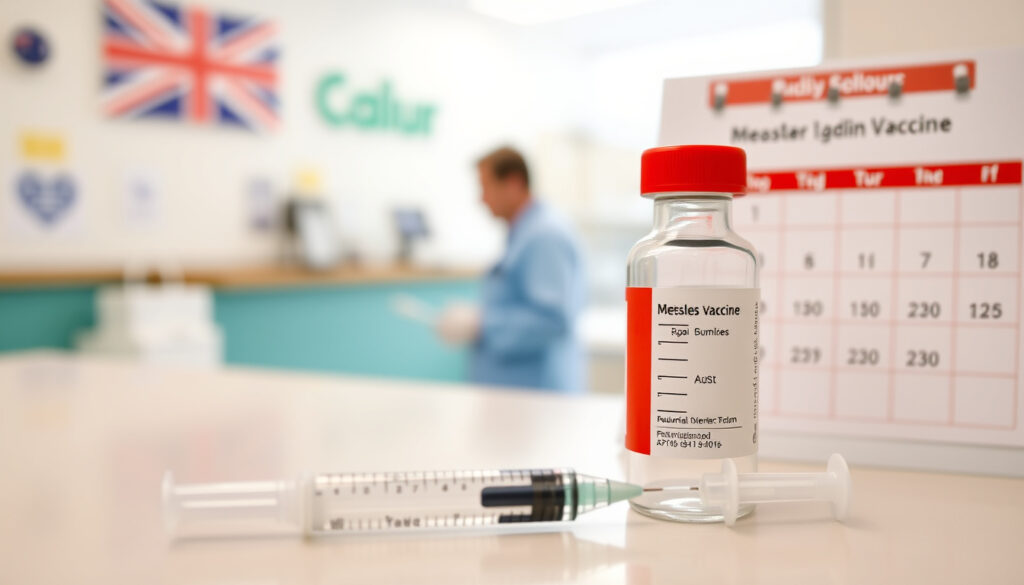
Measles Vaccine in Australia: Boosters, Age & Access
If you were born after 1966 and can’t remember your last measles shot, you’re not alone — Australian GPs hear this question often because the answer depends on your birth year, vaccine records, and a historical cut-off that leaves many adults uncertain. The short version: people born during or since 1966 need two documented doses of a measles-containing vaccine, according to the Australian Immunisation Handbook.
Vaccine type: MMR (measles-mumps-rubella) · First dose age: 12 months · Second dose age: 18 months (or 4 weeks after first) · Doses required: 2 · Eligibility: born during/after 1966 without two documented doses
Quick snapshot
- Two valid doses are enough — no further doses are recommended (NCIRS, the national immunisation research centre).
- People born before 1966 are generally considered immune (Australian Centre for Disease Control, Australia’s national disease agency).
- People born during or since 1966 are recommended to receive 2 doses (NCIRS).
- Whether one dose alone gives lifelong protection.
- How many adults born 1966–1994 are missing a second dose.
- Whether fully vaccinated older adults ever need another booster.
- Pre-1966: most people had measles as children; immunity assumed (Australian Centre for Disease Control).
- 1966 onwards: the vaccine era begins; 1966 becomes the cut-off (Australian Immunisation Handbook).
- Today: two-dose MMR for children and adults at risk (NCIRS).
- Find your immunisation history statement or ask your GP. (Victoria Health)
- If fewer than two doses are recorded, book a catch-up dose. (Victoria Health)
- Victoria funds free MMR for most adults born during or since 1966 without two valid doses (Victoria Health, Victorian state health department).
Eight facts, one pattern: the rules come down to two documented doses, and access is the main barrier for most adults.
| Fact | Detail |
|---|---|
| Vaccine type | MMR (measles-mumps-rubella) |
| First dose age | 12 months |
| Second dose age | 18 months, or at least 4 weeks after the first dose for catch-up |
| Doses required | 2 |
| Born before 1966 | Generally considered immune from childhood measles |
| Born during/after 1966 | Two documented doses or serological evidence of immunity |
| Free for | Under-20s needing catch-up, refugees, humanitarian entrants; most other adults via state arrangements |
| If records are missing | A further dose is safe and recommended |
Does an adult need a measles booster?
The short answer: it depends on what your records show. Most adults asking the question are not looking for a third dose — they are one dose short of the current two-dose standard.
Do adults need boosters in Australia?
- Born during or since 1966: check that you have had two doses, at least four weeks apart (NSW Health, New South Wales health department).
- Fewer than two doses on record: a catch-up dose is the expected next step.
- Previously had measles: the infection itself counts as immunity in most cases.
The “booster” framing is part of the problem. The goal for most adults is not extra protection; it is completing the two-dose series that was standard for children but not always offered to adults in earlier decades.
Should a 55 year old get a measles booster?
- A 55-year-old born around 1970 sits in the 1966–1994 group, which may have received only one dose in childhood (Australian Centre for Disease Control).
- A 55-year-old born in 1965 falls before the cut-off and is generally considered immune.
- The deciding factor is the birth year, not the age.
So the honest answer is: check the year, then check the records. If the records show one dose and no history of measles, the expected move is a second dose.
Can I get measles if I was vaccinated 50 years ago?
- Two valid doses: you are in the protected group, and no further doses are recommended.
- One dose: you may be under-vaccinated if the second dose was never given.
- Not sure: an extra dose is safe, which is why clinical guidance leans toward vaccinating rather than testing.
The Australian Centre for Disease Control is reassuring on the core question: adults are generally considered immune to measles if they have been fully vaccinated or have previously had measles (Australian Centre for Disease Control). The catch is the definition of “fully vaccinated” — two valid doses, not one.
“Not sure” counts as “not protected” for adults born after 1966. The system does not demand proof of immunity — it recommends a dose and moves on.
The pattern: the “booster” question is almost always a missing-second-dose question, not a waning-immunity one.
At which age is the measles vaccine given?
Australia’s routine schedule is built around two dose points: 12 months and 18 months. Everything after that is catch-up.
Measles vaccine at 9 months
- The routine first dose in Australia is 12 months, not 9.
- A 9-month dose appears in some overseas schedules and in higher-risk situations.
- If you are travelling with a baby before 12 months, ask your GP whether an early dose is advised.
The federal Department of Health and Aged Care anchors that 12-month timing: the National Immunisation Program funds measles vaccine for children from 12 months of age (Department of Health and Aged Care, federal health ministry).
Measles vaccine dose
- Two doses are needed for full protection.
- The two doses are given at least four weeks apart.
- Both doses should be at 12 months of age or older to count as valid.
NSW Health restates the same national rule in plain terms: anyone born during or since 1966 should have had two doses at least four weeks apart (NSW Health). The four-week interval is what you plan around when catching up before travel.
Measles vaccine age Australia
- 12 months: first routine dose.
- 18 months: second routine dose.
- Any age: catch-up if there is no evidence of two doses.
The schedule does not close at childhood. Anyone who missed the routine ages can start the series as an adult — that is why the questions in this guide keep returning to records rather than age.
The pattern: childhood is the target window, but the same two-dose rule applies whenever you catch up. Miss the ages, and you do not miss the vaccine — you just take it later.
Why don’t people born before 1966 require MMR vaccination?
Not because they were vaccinated. Because most of them already had measles.
What vaccine left a scar on your arm in the 60s?
- The round scar on an upper arm is from the smallpox vaccine, not measles.
- Smallpox vaccination ended after eradication; the scar is unrelated to measles immunity.
- Measles vaccination began in Australia in the late 1960s — around the era the 1966 cut-off points to.
The scar question keeps appearing because so many Australians are trying to reconstruct a vaccine history from memory. That scar is a red herring; it tells you nothing about measles protection.
When did they start vaccinating for measles in Australia?
- Late 1960s: measles vaccine becomes available in Australia.
- 1966: the cut-off used for assumed immunity.
- Before 1966: most people caught measles in childhood; immunity assumed.
Why 1966? Because people born before it are likely to have had measles as children, and natural infection was the default immuniser of that era. The Australian Immunisation Handbook formalised the line: anyone born during or since 1966 is judged by vaccine records, not by the odds of childhood infection (Australian Immunisation Handbook, Australia’s national vaccine manual).
The 1966 cut-off means the older you are, the more likely you are already immune — but from the disease, not the vaccine. Age made you safer in the messiest possible way.
Why this matters: the cut-off is not a bureaucratic accident. It marks the moment in Australian history when measles stopped being inevitable and became preventable.
How do I know if I have had the measles vaccine?
Two routes lead to an answer: paperwork or a blood test.
Checking your immunisation records
- Your Medicare immunisation history statement lists vaccines recorded on the Australian Immunisation Register.
- GP records and childhood health books fill in the gaps when the register is incomplete.
- A record showing two valid doses settles the question.
Most adults born in the 1960s to 1980s find the register incomplete; many childhood doses were never uploaded. Treat a missing record as an unknown, not as proof that you never had the vaccine.
Serological testing for antibodies
- A blood test can confirm measles antibodies.
- Serological evidence of immunity is accepted in place of vaccine records.
- If the result shows immunity, no vaccination is needed.
NCIRS, the national immunisation research centre, is clear on this: if a person has measles serology results or a documented diagnosis proving immunity, they do not need measles vaccination to be protected (NCIRS). The same guidance notes that an extra dose is safe for people who have already been vaccinated or are immune — provided they are not pregnant or severely immunocompromised.
The implication: testing and vaccinating are both accepted answers to a missing record. For most adults, the catch-up dose is faster and clinically acceptable — which is why the default advice leans that way.
Is the measles vaccine free in Australia?
Usually, yes — but the vaccine and the appointment are billed separately. Under the National Immunisation Program, measles vaccination is free for people under 20 years of age and for refugees of any age, according to healthdirect, Australia’s national health advice service.
Where to get the measles vaccine in Australia
- Your GP is the most common access point.
- Some pharmacies offer MMR vaccination.
- Community immunisation clinics run catch-up sessions in some areas.
NSW Health’s measles factsheet spells out the arrangement: if an eligible person does not have evidence of two doses, the vaccine itself is free, though a doctor or pharmacist may charge a service fee (NSW Health). That split — free jab, paid visit — is the pattern to expect.
Measles vaccine cost and free eligibility
- Free under the National Immunisation Program: children from 12 months, under-20s needing catch-up, and refugees and humanitarian entrants of any age (Department of Health and Aged Care, federal health ministry).
- Most other Australians and permanent residents: the vaccine is free under state and territory arrangements (Department of Health and Aged Care).
- Victoria: state-funded MMR for everyone born during or since 1966 without two valid doses or serological immunity (Victoria Health, Victorian state health department).
Free vaccine, paid visit. The MMR dose is covered for most eligible adults in Australia, but the GP consultation can still land on your bill — ask about fees before you book.
The implication: cost is rarely the real barrier — unclear eligibility and consultation fees are.
The pattern across states is consistent: eligibility is generous, but someone has to administer the dose, and that service is where the cost sneaks in.
Measles vaccine: weighing the upsides and downsides
Upsides
- Two valid doses close the case — no booster habit needed.
- A catch-up dose is safe even if you are already immune.
- Under-20s and refugees get the vaccine free through the National Immunisation Program (healthdirect).
- Victoria funds MMR for most adults born during or since 1966 who lack evidence of two doses (Victoria Health).
Downsides
- The jab is not given during pregnancy or for people who are severely immunocompromised.
- The vaccine can be free while the consultation is not — check the fee before you book.
- If your records are incomplete, you may be advised to take a dose you probably already had.
The trade-off: the main cost is administrative, not medical. For adults with incomplete records, the inconvenient part is the clinic visit, not the needle.
Measles vaccine in Australia: a short timeline
Three periods explain most of the confusion around measles immunity in Australia.
- Pre-1966: measles circulates widely; most children catch it and are presumed immune for life (Australian Centre for Disease Control).
- 1966 onwards: the vaccine era begins; 1966 becomes the reference cut-off for immunity (Australian Immunisation Handbook).
- 1966–1994: many Australians receive only one dose in childhood, leaving gaps that persist into adulthood (Australian Centre for Disease Control).
- Today: two-dose MMR for children, plus catch-up for adults without evidence of immunity (NCIRS).
What this means: your birth year tells you which era you belong to, and your records tell you whether that era left you fully protected.
What’s confirmed, what’s still unclear
Measles vaccine guidance has strong certainties and a few honest gaps. Here is the split.
Confirmed facts
- The measles vaccine is safe and effective.
- Two valid doses provide long-term protection.
- People born before 1966 are generally considered immune.
The Australian Immunisation Handbook anchors the first two points: it treats the measles vaccine as a routine part of the national schedule and requires two documented doses for anyone born during or since 1966. (Refer to Australian Immunisation Handbook.)
What’s unclear
- Whether a single dose alone provides lifelong immunity.
- How many adults born 1966–1994 are missing a second dose.
- Whether fully vaccinated older adults will ever need another booster — current guidance says they do not.
- Whether to test or vaccinate when records are missing; both routes are accepted.
The pattern: the guidance is assertive where it matters — two doses work, and the vaccine is safe. The uncertainty sits at the edges: one-dose durability, cohort gaps, and whether older adults will ever need another round.
What the health authorities recommend
“Adolescents and adults born during or since 1966 are recommended to have received 2 doses of measles-containing vaccine.”
— Australian Immunisation Handbook, Australia’s national vaccine manual
“People who have received 2 doses of a measles-containing vaccine at least 4 weeks apart, with the first dose given at 12 months of age or over, do not require further doses.”
— NCIRS, the national centre for immunisation research and surveillance
“People in Australia born before 1966 are generally considered immune to measles because many are likely to have had measles during childhood.”
— Australian Centre for Disease Control, Australia’s national disease agency
“Most other Australians and permanent residents are eligible for free measles-containing vaccine under state and territory arrangements.”
— Department of Health and Aged Care, Australia’s federal health ministry
Read them together and the message is consistent: two doses define protection, the pre-1966 cohort is presumed immune, and cost is not the barrier for most adults.
What this means for Australian adults
If you were born before 1966, your measles immunity is presumed — no action needed. If you were born during or since 1966, the task is narrower: find evidence of two valid doses, or get a dose and close the gap. The vaccination is free or near-free for most adults, and the clinical downside of an extra dose is minimal. For every adult in Australia in that position, the way forward is clear — check your records this week, and if the second dose is missing, book the catch-up shot before the next measles case makes the question urgent.
Related reading: Working Safety: Essential Rules and Hazard Guide · Employment Assistance Program Australia: EAF vs EAP – Access & Benefits
health.gov.au, health.tas.gov.au, health.wa.gov.au, racgp.org.au
Frequently asked questions
Can the measles vaccine cause autism?
No. Large-scale studies have not found a link between the MMR vaccine and autism, and Australia’s immunisation guidance continues to recommend MMR as a safe and effective vaccine. The original claims that raised the concern have not been supported by later research.
How long does the measles vaccine protect you?
For people with two valid doses, protection is considered long-term, and no further doses are recommended. The two-dose schedule is designed to last; the open question is what a single dose does decades later.
What is the MMRV vaccine?
MMRV combines measles, mumps, rubella and varicella (chickenpox) protection in one shot. It is used in some childhood schedules; for adults catching up, MMR is the vaccine you will usually be offered.
Can you get measles if you’ve been vaccinated?
It is uncommon. With two valid doses, health authorities consider you protected and do not recommend further doses. No vaccine is 100% effective, but two doses of MMR are the standard that national programs rely on.
Is the measles vaccine safe during pregnancy?
No — MMR is a live vaccine and is not given during pregnancy. The same NCIRS guidance that allows an extra dose for most adults excludes pregnancy and severe immunocompromise.
Do I need a measles booster before travelling?
If you don’t have evidence of two doses, yes. Catch-up doses are given at least four weeks apart, with the first at 12 months of age or older. Check your records before you travel, not after.
More related posts
 Carl Thomas Dean Dies at 82: Dolly Parton’s Husband
 Michelle Bridges: Age, Career, Partner, Net Worth & 12WBT
 Desmond Harrington: Career, Weight Loss & Current Life
 Dana White Net Worth, Role, and Health Facts (2025)
 Angry Anderson: Real Name, Mad Max Role, and Bikie Myth
 Get Out Movie: Plot, Twist, Family Secret & Ending Explained
 Anna Delvey: The True Story of the Fake Heiress
 Etch A Sketch – How the Classic Toy Works and Its History
