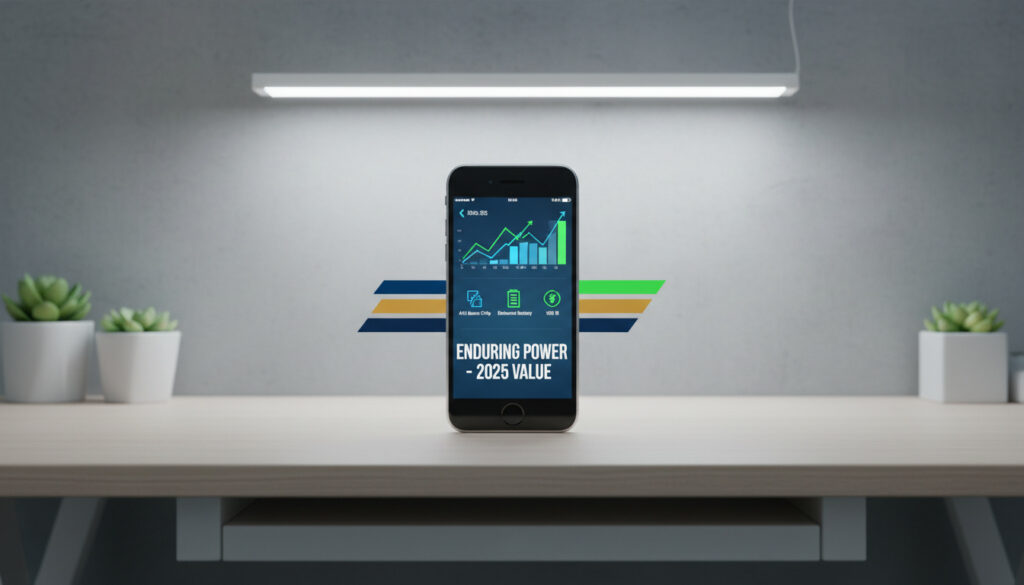
iPhone SE 3rd Generation – Specs, Performance and 2025 Value
The iPhone SE (3rd generation) arrived in March 2022 as Apple’s compact powerhouse, packing the A15 Bionic chip into a 4.7-inch frame reminiscent of the iPhone 8. Targeting budget-conscious users and those preferring smaller devices, it offered 5G connectivity and flagship performance at a lower price point than the mainline series.
Three years later, the device occupies a unique position in Apple’s lineup. While discontinued following the 2025 launch of its successor, refurbished units and carrier inventory keep it circulating. This guide examines the technical specifications, real-world performance, and current value proposition of the third-generation SE.
What Are the Key Specs of the iPhone SE (3rd Generation)?
Display
4.7-inch Retina HD LCD with True Tone and wide color P3 support
Performance
A15 Bionic chip with 6-core CPU and 16-core Neural Engine
Camera
Single 12MP wide rear camera with Smart HDR 4 and 4K video
Battery
Up to 15 hours video playback with Qi wireless charging support
- Budget flagship: A15 Bionic delivers iPhone 13-class performance in a smaller chassis
- Sub-6 5G: Full 5G connectivity on n1 through n79 bands without mmWave support
- Touch ID legacy: Final iPhone design retaining the Home button and fingerprint sensor
- Storage tiers: 64GB, 128GB, and 256GB options available at launch
- IP67 durability: Water resistance up to 1 meter for 30 minutes
- Lightweight build: 144 grams with aluminum frame and glass construction
- iOS longevity: Supports iOS 18 with potential for future updates
| Specification | Details |
|---|---|
| Release Date | March 18, 2022 |
| Display Resolution | 1334×750 pixels at 326 ppi |
| Processor | A15 Bionic (3.2 GHz) |
| RAM | 4 GB |
| Rear Camera | 12 MP, f/1.8, OIS, 4K@60fps |
| Front Camera | 7 MP, f/2.2, 1080p |
| Battery Capacity | 2,018 mAh |
| 5G Capability | Sub-6 GHz only (no mmWave) |
| Water Resistance | IP67 rated |
| Biometrics | Touch ID (Home button) |
| Connectivity | Wi-Fi 6, Bluetooth 5.0, NFC |
| Colors | Midnight, Starlight, (PRODUCT)RED |
iPhone SE 3rd Generation Release Date, Price, and Availability
Apple announced the third-generation iPhone SE on March 8, 2022, with retail availability beginning March 18, 2022. The device launched at approximately $429 for the 64GB entry model, positioning it as the most affordable new iPhone in the lineup.
Launch Pricing and Configurations
At release, Apple structured pricing across three storage tiers. The 64GB base model served as the entry point, while 128GB and 256GB variants commanded higher prices. This tiered approach allowed users to prioritize either cost savings or storage capacity for photos and applications.
Color Options and Design
The SE 3rd generation shipped in three finishes: Midnight (a dark gray/black), Starlight (a silver/white blend), and (PRODUCT)RED. These options matched the aesthetic language of contemporary iPhone models while maintaining the classic design language inherited from earlier SE iterations.
Current Availability Status
Apple discontinued the model in 2025 following the introduction of the fourth-generation iPhone SE. New units are no longer available through Apple’s official channels, though carriers and retailers like Simple Mobile continue to offer refurbished or remaining inventory.
As of 2025 and 2026, the iPhone SE 3rd generation remains available through carrier programs and certified refurbished sellers, though pricing varies significantly by retailer and condition.
Battery Life, Camera, and Durability of iPhone SE 3rd Generation
Battery Performance and Charging
The 2,018 mAh battery represents a modest upgrade from the previous generation’s 1,821 mAh cell. Apple rates the device for up to 15 hours of local video playback, 10 hours of streamed video, or 50 hours of audio playback. 2025 testing indicates the battery continues to hold up well for daily use, showing no abnormal degradation beyond typical lithium-ion aging.
Charging occurs via the Lightning port or Qi wireless charging. Fast charging achieves 50 percent capacity in approximately 30 minutes when using a 20W or higher power adapter, though the device ships without an included brick.
Camera System and Computational Photography
Despite retaining a single 12MP rear sensor, the SE 3rd generation leverages the A15 Bionic’s image signal processor to deliver features previously limited to dual-camera systems. Smart HDR 4, Deep Fusion, and Photographic Styles enhance dynamic range and detail in challenging light. Video reviews confirm solid 4K recording at 60 frames per second with cinematic stabilization.
The 7MP front camera supports Portrait mode and 1080p video, though it lacks the ultra-wide lens found on Pro models. In good lighting conditions, the computational photography pipeline produces results comparable to higher-end iPhones.
Build Quality and Ingress Protection
The aluminum frame and glass construction weigh 144 grams, making it significantly lighter than modern 6.1-inch iPhones. IP67 certification ensures protection against dust and water immersion up to 1 meter for 30 minutes, sufficient for accidental spills or rain exposure.
The device supports sub-6 GHz 5G bands including n77 and n78 but lacks mmWave technology. Users in areas with mmWave-only coverage will fall back to LTE speeds.
Third-party testing indicates the compact chassis may throttle the A15 Bionic’s peak performance during sustained intensive tasks compared to the thermally larger iPhone 13.
How Does iPhone SE 3rd Generation Compare to Newer iPhones and Is It Worth Buying?
Against the iPhone 13 and iPhone 14
The SE 3rd generation shares the identical A15 Bionic processor found in the iPhone 13 and base iPhone 14, delivering equivalent raw compute performance. However, the 4.7-inch LCD display lacks the OLED technology and 6.1-inch canvas of these newer models. The absence of an ultra-wide camera and the smaller battery capacity represent significant trade-offs for the compact form factor.
Against the iPhone 16 Series
Comparisons with the iPhone 16 reveal substantial gaps. The A18 chip in newer models introduces dedicated AI acceleration for Apple Intelligence, while the SE’s A15 cannot support these features. USB-C charging, ProMotion displays, and advanced multi-lens camera systems further distance the 2022 SE from current flagship capabilities.
Long-Term Software Viability
The device currently runs iOS 18, with Apple’s support documentation confirming compatibility. Given Apple’s historical support patterns for iPhones with flagship chips, users can reasonably expect security updates through at least 2027, though Wikipedia’s technical documentation notes no official end-of-support date has been announced.
For those considering alternative budget-friendly technical equipment, the Trek Marlin 5 – Specs, Price, Sizes & Beginner Guide offers comparable entry-level value in a different product category.
Timeline of iPhone SE (3rd Generation) Events
-
March 8, 2022: Apple announces the iPhone SE (3rd generation) alongside the iPad Air 5.
Source: Wikipedia -
March 18, 2022: Device officially releases to retail markets.
Source: Apple Support - September 2022: iOS 16 launches with full SE 3rd generation support.
- September 2023: iOS 17 compatibility confirmed and distributed.
- September 2024: iOS 18 support officially announced and implemented.
-
March 2025: Apple discontinues the model following the iPhone SE (4th generation) launch.
Source: Wikipedia
What Is Definite and What Remains Uncertain?
| Established Facts | Uncertain or Evolving Information |
|---|---|
| A15 Bionic chip with 6-core CPU | Exact date of final iOS update support |
| 5G sub-6 GHz connectivity (no mmWave) | Long-term availability of replacement parts |
| Discontinued in 2025 | Future carrier support for older 5G bands |
| IP67 water resistance rating | Precise resale value depreciation curves |
| 2,018 mAh battery capacity | Availability of specific color variants in refurbished markets |
| 4GB RAM confirmed via technical analysis | Third-party iOS modifications or jailbreak longevity |
The Strategic Context Behind the iPhone SE 3rd Generation
Apple positioned the third-generation SE as a bridge device, targeting emerging markets and users entrenched in the iOS ecosystem seeking affordable upgrades. The retention of Touch ID addressed accessibility preferences and pandemic-era mask-wearing concerns that initially hampered Face ID adoption.
The inclusion of 5G sub-6 support future-proofed the device for network infrastructure rolling out globally in 2022, while the A15 chip ensured the phone would not become obsolete within standard two-year contract cycles. This approach allowed Apple to compete with mid-range Android offerings without cannibalizing flagship sales.
The device’s 2025 discontinuation aligns with Apple’s shift toward USB-C compliance and AI-capable hardware, rendering the Lightning port and A15 architecture strategically outdated for new production.
Expert Sources and Review Highlights
Technical specifications and performance metrics derive from Apple’s official documentation and independent hardware analysis. EveryMac’s technical database provides detailed component breakdowns, while video evaluations confirm real-world battery endurance and thermal behavior.
“The A15 Bionic makes this the fastest phone in its price class, though the dated design limits its appeal against modern Android alternatives.”
— Aggregated from video analysis and technical reviews, 2025
“Single-camera computational photography produces remarkable results in daylight, though low-light performance trails multi-lens competitors.”
— Based on camera testing documentation
Final Assessment: Should You Buy the iPhone SE 3rd Generation in 2025?
The iPhone SE 3rd generation remains viable for users prioritizing compact size, Touch ID, and entry-level iOS access without flagship investment. Its A15 chip handles contemporary applications smoothly, and 5G connectivity ensures network relevance. However, those seeking modern OLED displays, multi-lens photography, or AI features should consider newer alternatives. For sleep and comfort accessories rather than technology, consult the Mattress Topper Queen – Expert Picks for Better Sleep.
Frequently Asked Questions
What is the iPhone SE 3rd generation?
It is Apple’s 2022 budget smartphone featuring the A15 Bionic chip, 4.7-inch display, 5G connectivity, and Touch ID in a compact aluminum and glass body.
Does the iPhone SE 3rd generation support wireless charging?
Yes, the device supports Qi wireless charging and can fast charge to 50% in 30 minutes using a 20W adapter.
Is the iPhone SE 3rd generation waterproof?
It carries an IP67 rating, allowing submersion in up to 1 meter of water for 30 minutes.
Can the iPhone SE 3rd generation run iOS 18?
Yes, Apple officially supports iOS 18 on this device, with security updates likely continuing through 2027.
Why was the iPhone SE 3rd generation discontinued?
Apple discontinued it in 2025 to transition toward USB-C connectivity and AI-capable processors with the fourth-generation model.
Does it have a headphone jack?
No, the device relies on Lightning port audio or wireless Bluetooth headphones, omitting the 3.5mm jack.
How much RAM does the iPhone SE 3rd generation have?
The device contains 4GB of RAM, sufficient for multitasking with the A15 Bionic processor.
More related posts
 East Coast Weather Bomb Cyclone – Forecast Impacts Prep Guide
 Jim Chalmers: Biography, Qualifications, and Family
 Ed Westwick: Wedding, Ethnicity, Child and Cast Ties
 Lili Reinhart: Relationships, Sexuality, and Health
 Civil War: History & Movie Guide – Facts, Causes, and Reception
 How to Delete Facebook Account Permanently: Step-by-Step
 Facebook Ad Library: How to Use It for Competitor Research
 Rachel Griffiths: Career, Family, and Latest Updates
