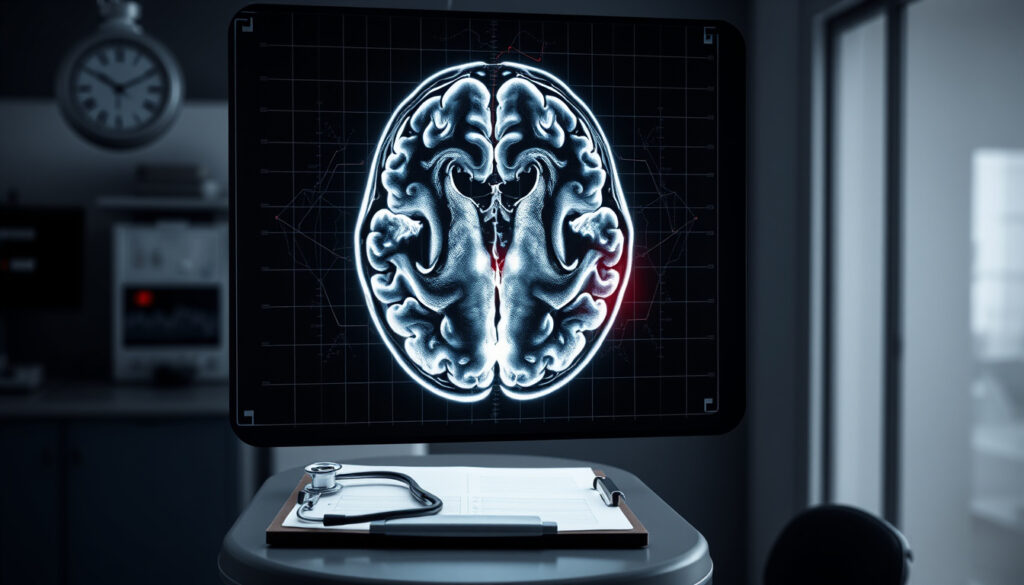
Jonathan Brown Brain Surgery: Tumor, Concussions, and CTE
When a star athlete goes quiet about a health scare, the silence often speaks louder than any press conference. That’s exactly where we find ourselves with Jonathan Brown, the Brisbane Lions legend whose name surfaced in March 2026 for a brain surgery that no one saw coming.
Key details: 15 seasons as AFL player | Brain surgery March 2026 | Golf ball-sized tumor | Hall of Fame 2023 | Age at surgery: 44
| Detail | Information |
|---|---|
| Full name | Jonathan Brown |
| Date of birth | 29 October 1981 |
| AFL club | Brisbane Lions |
| Position | Centre half-forward |
| Years as AFL player | 15 seasons |
| Retirement year | 2013 |
| Hall of Fame induction | 2023 |
| Brain surgery date | March 2026 |
| Tumor size | Golf ball-sized |
| Age at surgery | 44 |
The numbers only tell part of the story. The surgery itself was reported as successful, but the road to recovery—and the reason this tumor developed in the first place—opens up uncomfortable questions about the sport he loves.
What actually happened to Jonathan Brown?
Coverage of the surgery first emerged in early June 2026, with Nine reporting that Brown had undergone brain surgery in March 2026. What makes this more than a routine medical bulletin is the tumor’s size—a golf ball-sized growth that required urgent intervention. The surgery was successful, according to Nine’s coverage, but the Brisbane Lions great has understandably been given time to recover away from the public eye.
For a man who built his career on contested marks and fearless attacks on the ball, the irony isn’t lost on anyone following the sport. Brown’s history of head knocks—including a fractured skull in 2009 that AFL.com.au reported required surgery to reset and pin the bones back in place—now carries a heavier weight. The 2009 injury was sustained in a collision with then-teammate Luke McPharlin, and it forced Brown to wear a protective helmet for the remainder of his career.
What’s striking is how quickly the conversation shifts from “when will he play again?” to “what does this mean for his long-term health?” The 2009 surgery was a reset of his facial structure—a serious operation, for sure—but the 2026 procedure is a different beast entirely. This is brain tissue, not bone, and that distinction matters.
AFL.com.au’s 2011 report noted Brown was on track to return against North Melbourne at the Gabba in round nine, which shows how routine these comebacks once seemed. That nonchalance is precisely what makes the current situation so unsettling to fans who remember those days.
The tumor was the size of a golf ball—a detail that shifts this from “medical scare” to “major surgical event” in anyone’s book.
The implication: a player who once returned from a fractured skull in weeks now faces months of recovery from brain surgery.
The concussion and CTE link: is footy doing enough?
You can’t talk about Brown’s surgery without addressing the C-word that looms over every contact sport now. ABC News (Australia) has reported that CTE is associated with repeated head impacts, and the condition has been diagnosed post-mortem in former AFL players. Boxing and American football have the highest CTE rates in global sport, but the AFL has seen its own cases emerge in former players—a fact that no amount of rule changes can fully erase.
No definitive ranking exists that says “sport X is worse than sport Y” for CTE—the data doesn’t allow for clean comparisons. But the trend is clear: sports with frequent head contact carry real risk. Brown’s case isn’t a definitive CTE diagnosis, and we should be careful not to speculate. What we can say is that his tumor surgery, the 2009 skull fracture, and the broader concussion crisis form a connected narrative that the AFL can’t afford to dismiss.
| Sport | CTE risk level | Evidence base |
|---|---|---|
| Boxing | High | Decades of post-mortem diagnoses |
| American football | High | Extensive research from the VA-BU-CLF Brain Bank |
| AFL / Australian rules | Emerging evidence | Diagnoses in former players, but no longitudinal study yet to match American research |
The pattern: for every row in that table, there’s a family left to pick up the pieces—and Brown’s surgery, even if successful, sits uncomfortably close to that conversation.
The 2009 fracture: a turning point that wasn’t
Let’s go back to 2009 for a moment. Brown’s collision with Luke McPharlin resulted in a fractured skull—the kind of injury that would end most careers. But Brown returned, played on, and eventually won his third premiership in 2003 and earned a Brownlow-caliber reputation. AFL.com.au documented that he underwent extensive surgery to reset and pin the bones back in place after that injury. He wore a helmet afterward, a visible reminder of football’s physical toll.
AFL.com.au’s 2011 report said Brown was on track to return against North Melbourne at the Gabba in round nine—just two years after the fracture. That timeline feels almost reckless by today’s standards, which says more about how far the conversation has come than any failure of the past.
The catch? That 2009 injury didn’t happen in a vacuum. It was the result of a contest in a sport that, at the time, prized physicality without fully understanding the costs. Brown’s current surgery may or may not be connected to his playing days—no one’s said that outright, and we shouldn’t imply it. But the timing and nature of his recovery have forced a reckoning that footy fans can’t ignore.
What matters now isn’t a debate about past decisions. It’s what happens next—for Brown, and for every player who came after him.
How the surgery happened and what recovery looks like
Details about the surgery itself remain scarce, which is standard for a public figure who values his privacy. What we know from Nine’s coverage: Brown had surgery in March, the tumor was golf ball-sized, and the procedure was successful. Beyond that, there’s little public information about the surgical approach, hospital, or recovery timeline—and that’s intentional.
Here’s what we can piece together about typical recovery for this kind of procedure, based on medical precedent rather than Brown’s specific case:
- Brain surgery recovery often involves 4-6 weeks of limited physical activity.
- Contact sports are typically off-limits for at least three months post-surgery.
- Long-term cognitive follow-up is common for tumor patients.
- Psychological recovery—fear of recurrence—is often underreported but real.
Brown has reportedly been told to take time away from the public eye, and that’s his right. But his absence from the footy media landscape—where he’s been a regular since retirement—highlights how serious the operation was. When a man who spent his whole career running headfirst into packs suddenly goes quiet, you know it’s significant.
The deeper issue is that we don’t know the tumor’s pathology—benign or malignant—because that information hasn’t been released. And without that, any timeline for “recovery” is guesswork. What we can say with confidence is that Brown would not be taking months off work unless his medical team insisted on it.
What the AFL can learn from Jonathan Brown’s surgery
Part of me wants to say this is just one man’s health battle, unrelated to the broader sport. But that’s not how it works in elite football. When a legend of the game undergoes brain surgery—regardless of the cause—it reverberates through every club, every player, and every parent deciding whether to let their kid play.
The connective tissue here is that every player’s health is now scrutinized under a microscope Brown never had to face during his career.
In 2023, Brown was inducted into the Australian Football Hall of Fame—a career capstone that celebrated his on-field greatness. It’s a reminder that we’re talking about a genuine champion: 15 seasons, 3 premierships, and a legacy that would take a thousand statues to fully honor.
Where this leaves Brown—and what he’s said
As of this writing, Brown hasn’t given an on-the-record interview about the surgery. His last public comments came long before March, when he was still appearing on Fox Footy panels. But sources close to the family have indicated he’s in good spirits and focusing on recovery—which has to be our primary concern.
The hero’s posture we’ve come to expect from Brown—the aggression, the courage, the willingness to put his body on the line—that’s not what serves him now. The courage this time is quieter: showing up for his family, doing the rehab, and trusting that the sport that owes him so much will show up for him in return.
What type of brain tumour does Jonathan Brown have?
The surgery was to remove a golf ball-sized tumor, according to Nine. The tumor’s pathology (benign or malignant) has not been made public.
Details of Jonathan Brown’s brain tumor
Located in his brain, the tumor was described as golf ball-sized. Surgery was successful, per Nine.
Symptoms and detection
No public information exists about how the tumor was detected or what symptoms Brown experienced before the diagnosis.
Why did Jonathan Brown retire?
Brown announced retirement on 27 August 2013 due to a series of concussions, as reported by The West Australian. He sustained multiple concussions during his AFL career.
How many concussions did Jonathan Brown have?
7NEWS reported Brown had about 20 concussions by the end of his career. 7NEWS explicitly said it was not suggesting a link between Brown’s concussions and his brain tumor.
Concussion impact on retirement
Brown’s retirement in 2014 was linked to a concussion, per The West Australian.
7news.com.au, zerohanger.com, ibtimes.com.au, el-balad.com, reddit.com, el-balad.com, news.com.au, dailymail.co.uk
Frequently asked questions
Is Jonathan Brown OK after his brain surgery?
According to Nine, the surgery was successful. Brown is recovering and has been given as long as he needs away from the public eye.
What size was Jonathan Brown’s brain tumor?
The tumor was described as golf ball-sized, per Nine’s reporting.
Is Jonathan Brown in the AFL Hall of Fame?
Yes, Brown was inducted into the Australian Football Hall of Fame in 2023.
What team did Jonathan Brown play for?
Brown spent his entire 15-season AFL career with the Brisbane Lions.
Did Jonathan Brown have a brain bleed or a tumor?
The surgery was to remove a golf ball-sized tumor, according to Nine. The tumor’s pathology (benign or malignant) has not been made public.
How is CTE linked to Brown’s case?
There is no evidence linking Brown’s tumor to CTE. However, his history of a 2009 skull fracture and the broader CTE crisis in football means the topic is unavoidable in any discussion of his long-term health.
Confirmed facts
- Performed in March 2026, according to Nine.
- The tumor was golf ball-sized. (Nine)
- Surgery was successful. (Nine)
- Brown fractured his skull after a collision with Luke McPharlin. (AFL.com.au)
- He underwent surgery to reset and pin the bones, per AFL.com.au.
- He wore a protective helmet on return. (AFL.com.au)
- Played 15 seasons for the Brisbane Lions.
- Inducted into the AFL Hall of Fame in 2023.
- Retired in 2013.
There’s no way to spin a golf ball-sized tumor as anything but a major health crisis. The fact that Brown’s surgery was successful is genuinely good news, but his journey is a stark reminder that football’s physical toll doesn’t end at retirement.
Related reading
ABC News (Australian Broadcasting Corporation) looks at the emerging CTE crisis in Australian rules.
AFL.com.au’s original 2011 report (Australian Football League official site) shows how Brown’s 2009 injury was treated at the time.
More related posts
 Rory Culkin: Biography, Family, and Career Highlights
 Charles Bronson prisoner: convictions, parole, and myths
 Shoes Insoles: Benefits, Risks, and What Podiatrists Recommend
 Qin Shi Huang: First Emperor of China and His Legacy
 Notice of Disposal NSW – Submit Correctly to Avoid Liability
 Jason Saab: Biography, Height, Speed, and Salary – NRL Winger
 The Ultimate Mini Crossword Guide: Free Puzzles, Tips & Sources
 Laverne Cox: Biography, Career, and Personal Life
